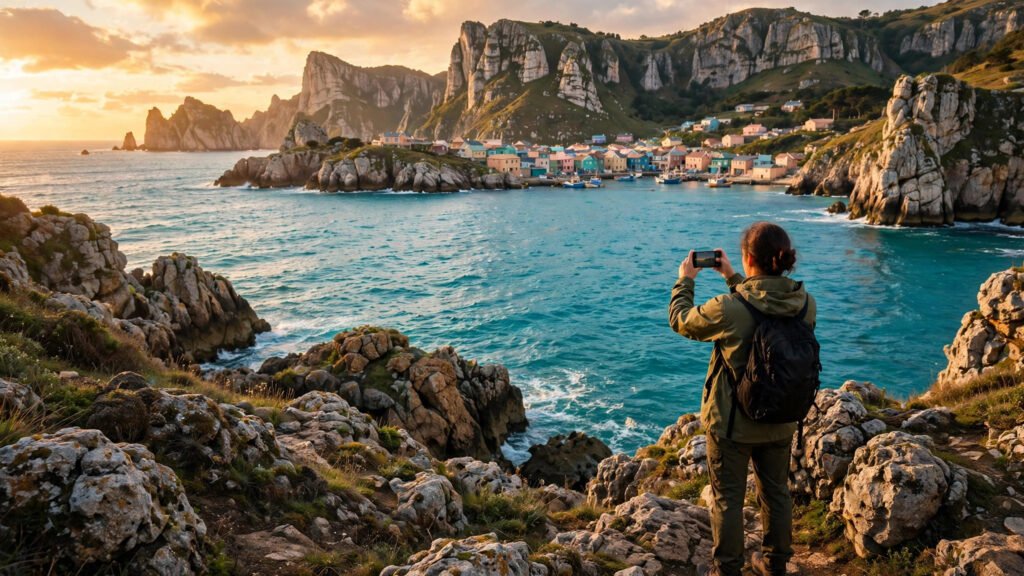
Niue is one of the smallest nations on Earth, a single raised coral island in the South Pacific, yet it is famous around the world for something much bigger than its size: free wireless internet, available across the island. For Niueans, the phone is not a luxury gadget. It is how a scattered community stays one community, how families talk across an ocean, and how a tiny island does business with the rest of the world.
So why does Niue offer free Wi-Fi, and how do Niueans actually use their phones day to day? The answer starts with geography. Niue has no neighbouring island a short ferry ride away, no sprawling city, and a population spread around one coastline. When distances are measured in ocean rather than streets, connection has to travel through the air.
One Island, One Network
Niue’s free Wi-Fi story goes back to the early 2000s, when the island set out to make wireless internet available to residents and visitors alike. At a time when many far larger countries were still arguing about who should pay for rural broadband, Niue treated connectivity as something the whole island should share. That early decision is still what people think of first when they hear the country’s name in technology circles.
The idea was simple and practical. A small island cannot afford to leave anyone offline. Schools, clinics, government offices, small businesses and homes all need the same connection, and a shared wireless network was a way to reach them without laying cables to every door. For visitors, it was a welcome surprise: step off the plane in Alofi, the capital, and the island is already online.
Today, Niueans use their phones the way people everywhere do, but the setting changes the stakes. A message is not just a chat. It can be the way a family checks in after a storm, the way a guesthouse confirms a booking, or the way a student joins a lesson. When the network covers the island, the phone becomes the island’s meeting place.
- Niue is a single Pacific island nation famous for offering free wireless internet across the island since the early 2000s.
- With one coastline community and no nearby neighbour island, phones keep Niueans connected to each other and to family overseas.
- Free Wi-Fi supports schools, clinics, small businesses and tourism, turning the phone into the island’s everyday meeting place.
Staying Close to Family Overseas
One of the most important jobs of the Niuean phone is keeping families together. Many Niueans live in New Zealand, and a large diaspora community is based around Auckland. Phones and video calls shrink that distance to nothing. Birthdays, funerals, church news and family decisions all travel through the same small screen, and free island-wide Wi-Fi means relatives back home can join in without worrying about the cost of every minute.
That matters even more in a community where everyone knows everyone. News travels fast on Niue, and the phone is how it travels now: a community notice, a church event, a sports result or a warning about rough seas can reach the whole island in minutes. In a place this small, being offline would mean being out of the loop, and the free network helps make sure nobody is.
When the network covers the island, the phone becomes the island’s meeting place.
Work, School and Small Business
For work, the phone is Niue’s shopfront and office in one. Guesthouses and tour operators confirm bookings by message, fishermen and farmers coordinate with buyers, and craft sellers show their work to visitors before they even arrive. Tourism is small-scale on Niue, built around diving, whale watching, walking tracks and village stays, and a phone full of photos and messages is often the first introduction a visitor gets.
Schools and clinics benefit in the same way. Learning materials, messages between teachers and parents, and health information can all move across the island network without a trip into town. For students, a phone is a library, a classroom link and a way to stay in touch with cousins and friends studying overseas. None of this needs a big city infrastructure, just a reliable connection and a charged phone.
- Free island-wide Wi-Fi dates back to the early 2000s, when Niue chose shared connectivity over leaving anyone offline.
- Phones link Niueans with the large diaspora community in New Zealand, especially around Auckland.
- Guesthouses, tour operators and small sellers use phones as their shopfront, booking desk and photo album.
- Weather and sea conditions shape daily plans, so checking the phone before heading out is a habit, not a novelty.
Weather, Sea and Daily Decisions
Life on Niue follows the weather and the sea. Fishing trips, boat outings, road travel and outdoor work all depend on conditions that can change quickly in the Pacific. Checking the phone before heading out is a daily habit: forecasts, warnings and messages from neighbours help people decide whether today is a day for the sea or a day to stay ashore.
That habit also matters when storms approach. In cyclone season, official warnings and community messages spread through phones faster than any other channel, and families can check on each other village by village. A network that reaches the whole island is, in those moments, a safety net as much as a convenience.
Visitors notice the same thing from the other side. A traveller exploring Niue’s caves, reefs and tracks can check conditions, find a place to eat, or message a host without hunting for a connection. The free network is part of the welcome, and part of why such a small island feels so connected to the world.
Why Niue’s Example Still Matters
Other countries talk about closing the digital divide, and Niue shows what that looks like at island scale: one network, shared by everyone, treated as a public good rather than a product for the few. It did not make Niue rich, and it did not solve every challenge of island life. But it did give a tiny nation an outsized voice online, and it gave every Niuean a direct line to family, work and the wider world.
The lesson travels well beyond the Pacific. When connectivity is shared, a community stays together even when its people are spread across an ocean. That is why Niue’s free Wi-Fi story is still told more than twenty years on, and why the phone remains at the centre of Niuean daily life.
What to Watch Next
Niue’s story is not finished. The island keeps investing in staying connected, its diaspora keeps growing, and its small businesses keep finding new ways to reach visitors through their phones. What to watch next is how Niue balances that openness with island life: keeping the network free and shared, keeping families close across the ocean, and keeping the phone as the place where this small island meets the world. For related island stories, see how Cook Islanders check their phones before inter-island flights and ferries, how Faroe Islanders rely on their phones across scattered North Atlantic islands, and how Palauans rely on their phones across islands, tourism and daily life.