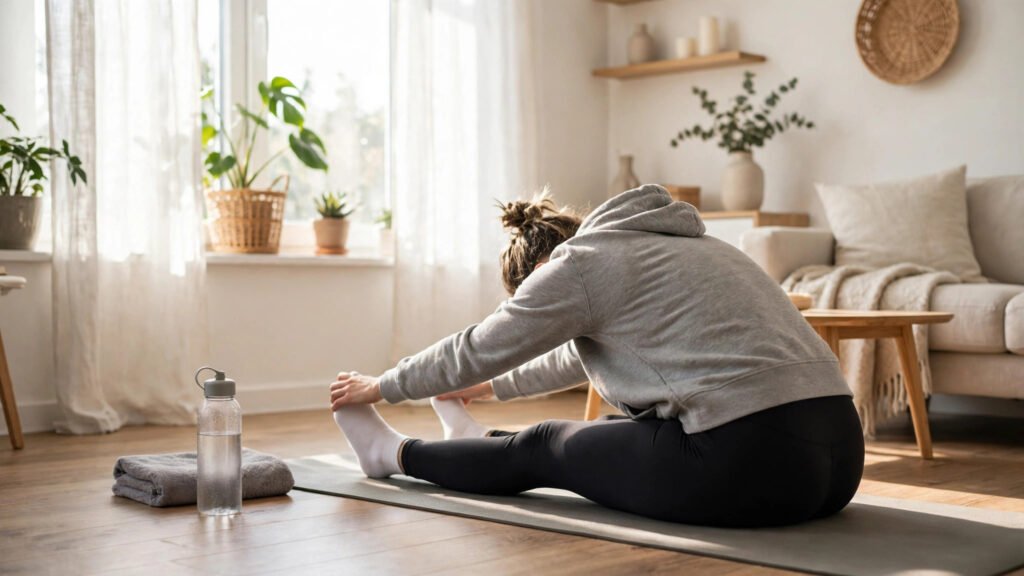
Learning how to recover after a workout matters just as much as the workout itself, because your body does most of its rebuilding after you stop moving. A good recovery routine does not need special equipment or a complicated plan. It needs a gentle cooldown, enough water, real rest, and a little patience with sore muscles.
Key Takeaways
- A short cooldown and gentle stretching help your body wind down gradually after exercise.
- Rest days, water, and sleep are the simple foundations of recovery, not optional extras.
- Mild soreness usually settles with light movement, while sharp or lasting pain deserves attention.
Why Recovery After a Workout Matters
Exercise creates small stresses in your muscles, and recovery is when your body repairs them. Skipping that step does not make you tougher, it usually makes the next session feel harder. You may feel stiff, tired, or less motivated, and those feelings can quietly break a routine that was going well.
Recovery is also about your nervous system and energy, not only your muscles. A hard session raises your heart rate and body temperature, and a sudden stop can leave you feeling light-headed or shaky. Slowing down gradually gives your body time to return to normal, which is why a cooldown is worth the extra few minutes.
How to Cool Down After a Workout
Start your cooldown while you are still warm. Walk slowly for three to five minutes, then move into gentle stretches for the muscles you used most. Hold each stretch in a comfortable position and breathe normally. Stretching should feel like a mild pull, never a sharp pain.
If you are building a home routine from scratch, a guide on doing a home workout without equipment is a useful place to start, since it keeps the session itself simple and easy to repeat. A short morning routine can also help on rest days: building a morning stretch routine keeps stiff muscles moving gently without turning a rest day into another workout.
- Walk or move slowly for a few minutes instead of stopping suddenly.
- Stretch gently while your muscles are still warm.
- Drink water during and after your session, and eat a balanced meal when you are ready.
- Keep the next day light if you feel very sore, rather than pushing through.
- Note what helped, so your routine gets easier to repeat.
Rest Days, Water, and Sleep
Rest days are part of training, not a break from it. On a rest day, light movement such as an easy walk or gentle stretching is usually enough. If you trained hard two days in a row, a full rest day is often the smarter choice, especially when you are just starting out.
Water matters more than most people expect. You lose fluid when you sweat, and replacing it steadily through the day helps you feel less tired afterwards. Tips on drinking more water every day can make this habit easier, such as keeping a bottle nearby and sipping regularly instead of waiting until you feel very thirsty.
Sleep is the third piece of the routine. During sleep your body does much of its repair work, so a late night after a hard session can leave you feeling flat the next day. A regular bedtime and a calm wind-down, without screens in the last part of the evening, help more than any single recovery product.
Rest days are part of training, not a break from it.
What About Sore Muscles?
Mild soreness a day or two after a new or harder workout is common, and it usually fades on its own. Light movement, a warm shower, and a good night of sleep often help more than staying completely still. Gentle walking or stretching keeps blood moving without adding new strain.
Sharp pain, swelling, or pain that does not improve after a few days is different from ordinary soreness. In that case, stop the exercise that caused it and seek advice from a qualified health professional. This article is general information only, not medical advice, and it is not a diagnosis or treatment for any injury.
Build a Simple Recovery Routine You Can Repeat
A recovery routine works best when it is short enough to do every time. Five minutes of cooldown, a bottle of water, a balanced meal, and a regular bedtime will cover most sessions. Add a rest day after harder workouts, and keep a simple note of how you felt the next day so you can adjust.
The goal is not to recover perfectly, it is to recover consistently. Small, repeatable habits keep you moving week after week, and that steady rhythm is what turns a new workout habit into a lasting one.
What to Watch Next
Recovery after a workout comes down to a gentle cooldown, light movement on rest days, steady water, and enough sleep. Treat mild soreness with patience and light activity, take sharp or lasting pain seriously, and keep your routine simple enough to repeat. When recovery becomes part of the workout itself, the next session starts from a much better place.