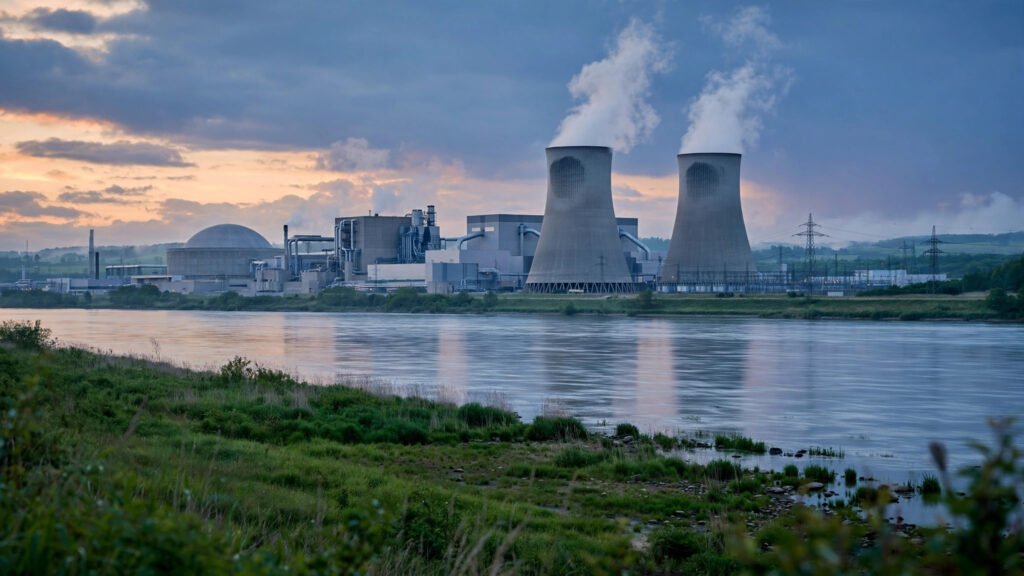
Bangladesh has taken a major step towards generating electricity from atomic energy for the first time. The first unit of the Rooppur Nuclear Power Plant began its power start-up process on Friday morning, after receiving approval from the Bangladesh Atomic Energy Regulatory Authority (BAERA) a day earlier.
The development marks the beginning of the final commissioning phase for the country’s first nuclear power facility, which is being built at Rooppur village on the banks of the Padma River in Ishwardi Upazila, Pabna District, with Russian technical and financial assistance.
Key Takeaways
- Rooppur Unit 1 began its power start-up process on Friday after BAERA approved Stage C activities a day earlier.
- The reactor is currently operating at very low power while engineers run tests before any electricity reaches the grid.
- Officials expect trial electricity supply to the national grid within weeks, with full operation of the first unit expected in 2027.
Regulator Gives the Go-Ahead
BAERA Chairman Mahmudul Hasan confirmed the development to New Age, saying the first unit began its power start-up process on Friday morning. The approval, granted on 29 October, authorised the unit to enter Stage C of commissioning, the phase in which reactor power is gradually increased to test and verify the performance of the plant’s integrated systems.
During Stage C, engineers test the reactor, the primary and secondary systems, the turbine-generator, electrical equipment, instrumentation and control, and the reactor protection and safety systems. The unit had already completed the tests of the B-2 sub-stage before entering this phase, a significant step towards synchronising the unit with the national grid.
Science and Technology Minister Faqir Mahbub Anam told New Age that the unit had not started generating electricity yet, as the criticality-related process had begun and power start-up activities were underway. Speaking separately to ANI, he said power generation could begin within the next two to three weeks, while officials expect electricity to start feeding into the national grid in the last week of November.
The power start-up process has begun, and Bangladesh is now cleared to conduct more tests before gradually beginning power generation.
Zero Power — For Now
Nuclear Power Plant Company Bangladesh Limited managing director Md Zahedul Hassan said it would take some time before the unit could generate electricity, adding that the reactor was currently operating at zero power. Reports put the reactor at less than 1 per cent of its thermal capacity during this early stage.
Once the plant is able to produce steam at 37 per cent, engineers will be able to rotate the turbine and generator, Hassan said. The unit could then supply around 300 megawatts of electricity to the national grid on a trial basis after four to five weeks.
Project director Dr Kabir Hossain told Arab News that the power start-up process had begun, and said power could be supplied to the national grid from the plant by December, depending on actual progress on the ground. The first 1.2-gigawatt reactor is expected to become fully operational in 2027, with the second unit to follow in 2028.
Two Reactors, 2,400 Megawatts
Rooppur comprises two Russian-designed VVER-1200 reactors, with a combined planned generating capacity of 2,400 megawatts of baseload electricity. Fuel loading for the first reactor took place in April and May, and the unit achieved first criticality — the point at which the nuclear chain reaction becomes self-sustaining — earlier in October.
Once both units are running, the plant is expected to eventually supply more than 10 per cent of Bangladesh’s energy needs, reducing the country’s dependence on imported fuels. The project is being built with technical assistance from Russia’s state atomic energy corporation Rosatom and operates under the oversight of the Bangladesh Atomic Energy Commission.
The milestone comes at a sensitive time for the region’s energy markets, where supply disruptions have kept fuel costs in focus. While nuclear power will not solve Bangladesh’s energy needs overnight, officials present Rooppur as a long-term anchor for a grid that still leans heavily on imported gas and oil.
- Bangladesh’s first nuclear power plant, built with Russian assistance at Rooppur on the Padma River.
- Unit 1 entered Stage C commissioning after BAERA approval on 29 October.
- Two VVER-1200 reactors will together provide 2,400 megawatts once fully operational.
- Trial grid supply of around 300 megawatts is expected within weeks, ahead of full operation in 2027.
What to Watch Next
The next steps are the gradual power increases and system tests of Stage C, followed by turbine rotation and trial electricity supply to the national grid. Officials have pointed to the last week of November for the first grid feed and to December as a possible window for power supply, with full operation of the first unit expected in 2027 and the second unit in 2028. How smoothly those tests run will decide whether Bangladesh’s first nuclear electricity arrives on that schedule.
For readers in Bangladesh, the project also sits alongside the everyday ways the country already moves money and information — a shift explored in our look at why Bangladeshis pay with bKash and Nagad instead of bank cards. In the wider energy picture, the region has also been dealing with the UAE’s containment of the Gem No. 2 oil spill and QatarEnergy’s 20-year LNG deal shaped by Hormuz shipping risks.