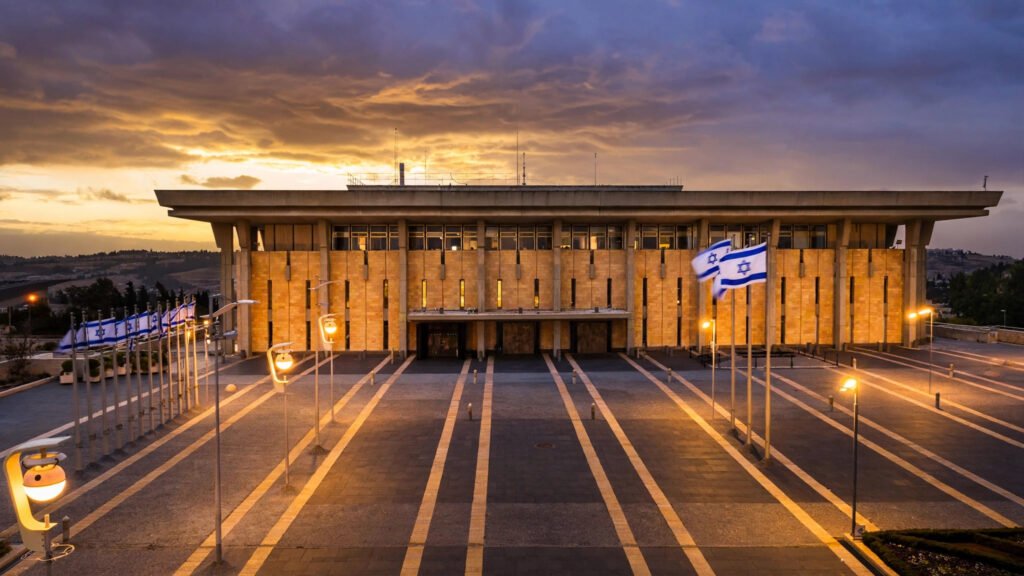
Israel’s election has moved from the ballot box to the negotiating table. On Sunday, November 1, President Isaac Herzog called on the country’s political leaders to accept the election results and show flexibility in coalition negotiations, warning against political entrenchment that could force the country into another election. At the same time, reports said the Arab parties, the Joint List and Ra’am, are expected to recommend opposition leader Gadi Eisenkot for prime minister when consultations begin at the President’s Residence.
Neither of the two main blocs won a majority in the October 27 vote. According to reported results, Prime Minister Benjamin Netanyahu’s bloc won 53 seats in the 120-member Knesset, the opposition bloc won 48 seats, and the Arab parties won a combined 19 seats, a record showing. A government needs the support of at least 61 lawmakers, so no camp can govern on its own, and the Arab parties have emerged as potential kingmakers in the talks that follow.
Key Takeaways
- President Isaac Herzog urged flexibility in coalition talks and warned against entrenchment that could lead to another election.
- The Joint List and Ra’am are expected to recommend Gadi Eisenkot for prime minister, which would give him 67 endorsements when combined with the opposition bloc’s 48 seats.
- No bloc won a majority: Netanyahu’s bloc holds 53 seats, the opposition bloc 48, and the Arab parties 19, against the 61 needed to govern.
The Arithmetic That Decides the Next Government
The numbers explain why the consultations matter so much. Likud remains the largest single party, with a reported 27 seats, followed by Eisenkot’s Yashar party with 21 and Naftali Bennett’s B’Yachad with 12. But in Israel’s parliamentary system, the largest party does not automatically form the government. The president consults the elected factions and then tasks the lawmaker he considers most likely to secure a parliamentary majority.
That is where the Arab parties’ expected recommendations change the picture. If the Joint List and Ra’am both recommend Eisenkot, as a senior Joint List official told Walla on Sunday, his endorsements would reach 67: the opposition bloc’s 48 seats plus the Arab parties’ 19. That total is above the 61-seat threshold, and reports said it would make it difficult for Herzog to withhold the mandate from Eisenkot and give it to someone else first. These are expected recommendations, not confirmed votes, and the consultations themselves have not yet taken place.
The reported final turnout was 77.7 percent, up from the previous election. The Knesset is expected to be sworn in on November 10, regardless of how the coalition talks are going. Herzog is expected to receive the official election results on Wednesday from Central Elections Committee chairman and Supreme Court Deputy President Justice Noam Sohlberg, with consultations at the President’s Residence set to begin the same day.
No bloc won a majority on its own, and that arithmetic has made the Arab parties potential kingmakers.
What Herzog Asked For, and What Eisenkot Offered
Herzog’s message on Sunday was directed at all sides. He called on party leaders to arrive at the consultations with creative solutions to prevent another round of elections, and he warned against political entrenchment. The warning carries weight because Israel has been through repeated elections in recent years, and another vote would prolong the uncertainty that followed an already divisive campaign.
On Saturday, Eisenkot set out four principles for any lawmaker willing to join his proposed coalition. As reported, they are: recognising Israel as a Jewish, democratic, liberal and equal state; committing to the values of Israel’s Declaration of Independence; requiring all citizens to perform military, national or civilian service; and recognising Hamas as a terrorist organisation whose military and governing capabilities in Gaza must be destroyed. Eisenkot said any member of the Knesset willing to accept those principles could become a partner in forming the next government, and he said he intended to establish the broadest possible government on that basis.
The opposition leaders are also coordinating among themselves. The four leaders of the bloc led by Eisenkot, alongside Together party co-chairs former Prime Minister Naftali Bennett and Yair Lapid, Yisrael Beiteinu leader Avigdor Lieberman and Democrats chairman Yair Golan, were expected to meet early in the week for the first time since election day to coordinate strategy, including whether to seek the first mandate from the president. Reports said the bloc would prefer to receive the mandate before Netanyahu, in part to gain control over legislative proceedings in the Knesset.
- Netanyahu’s bloc: 53 seats; opposition bloc: 48 seats; Arab parties: 19 seats combined.
- A government needs at least 61 seats in the 120-member Knesset.
- Consultations at the President’s Residence are set to begin on Wednesday.
- The candidate tasked with forming a government gets 28 days, with a possible 14-day extension.
- The new Knesset is expected to be sworn in on November 10.
- Reported turnout in the October 27 election was 77.7 percent.
The Arab Parties’ Role, and Its Limits
The Arab parties’ position is influential but not simple. According to reports, the Joint List is prepared to support anti-Netanyahu parties from outside the government, although it has ruled out joining a coalition itself. That distinction matters: supporting a candidate for the mandate and backing a government from outside are not the same as taking cabinet seats, and the details of any such arrangement would still have to be negotiated.
Other reports noted tensions within the wider opposition effort. United Arab List leader Mansour Abbas has been reported as seeing Yisrael Beiteinu leader Avigdor Lieberman as an obstacle to forming a new government, and Arab party figures have weighed whether helping to replace the Knesset speaker is a step they can take even while they remain cautious about replacing the government itself. These are reported positions in an ongoing negotiation, not settled agreements, and they show why the path to 61 seats may involve several separate deals rather than a single coalition announcement.
The talks also follow a campaign dominated by war and security. Voters went to the polls on October 27 in an election shaped by the conflict with Iran and its aftermath, days after Netanyahu warned that Iran and its proxies could try to disrupt the vote. The coalition that emerges will therefore inherit not only a divided parliament but also the security and diplomatic questions that defined the campaign.
What to Watch Next
What to watch next is what the article has already set out: whether the Joint List and Ra’am formally recommend Eisenkot when consultations begin on Wednesday, whether Herzog tasks him first with forming a government, and whether the 28-day mandate period, with its possible 14-day extension, produces a coalition that can command 61 seats. The other tests are whether the opposition leaders can agree on a common strategy in their early-week meeting, whether the Arab parties’ support takes the form of outside backing rather than coalition membership, and whether Herzog’s call for flexibility is enough to prevent another election. Until the consultations take place, the contest remains a race to 61, not a finished government.