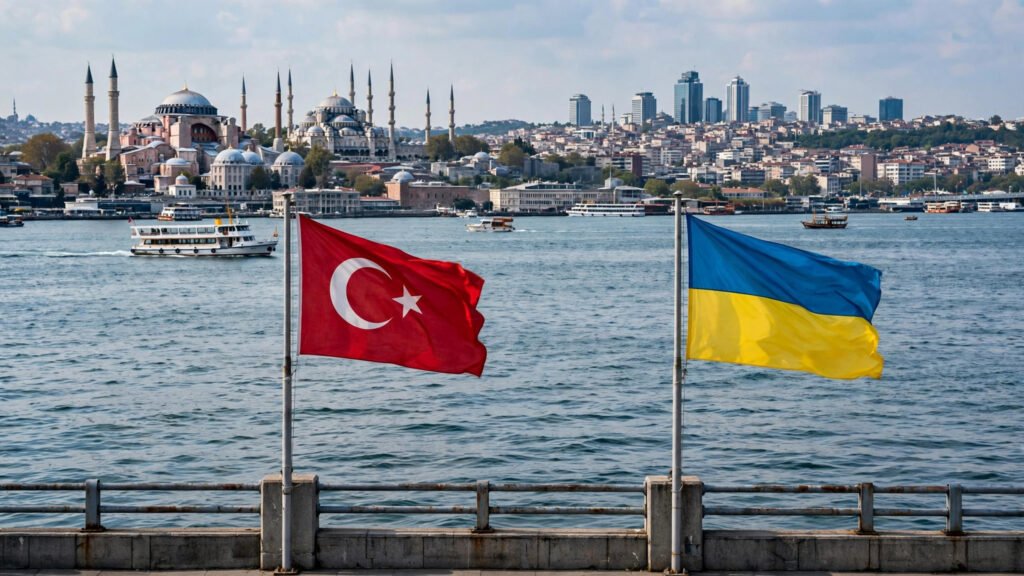
Ukrainian President Volodymyr Zelenskyy will pay a working visit to Turkey on Saturday, October 31, at the invitation of Turkish President Recep Tayyip Erdogan, with talks in Istanbul set to focus on the Russia-Ukraine war and security in the Black Sea.
The visit was announced on Friday by the Turkish Presidency’s Directorate of Communications. Its head of communications, Burhanettin Duran, said the high-level bilateral talks will take place in Istanbul and will cover steps to further strengthen cooperation between Turkey and Ukraine.
According to the announcement, the two leaders will also discuss regional and international developments, with a particular emphasis on the ongoing war between Russia and Ukraine and the security situation in the Black Sea.
Key Takeaways
- Zelenskyy will visit Turkey on October 31 at Erdogan’s invitation, with talks scheduled in Istanbul.
- The agenda covers bilateral cooperation, the Russia-Ukraine war, and Black Sea security.
- Ahead of the visit, Zelenskyy said Ukrainian deep strikes can now reach Russian facilities as far as Yamal and Western Siberia.
The Istanbul Meeting
The choice of Istanbul as the venue underlines Turkey’s position as a country in direct contact with both sides of the war. Turkey controls the straits linking the Black Sea to the Mediterranean, and its diplomacy has repeatedly returned to the question of keeping Black Sea shipping routes open and safe.
The Turkish presidency’s statement framed the meeting as a working visit rather than a ceremonial one. That wording points to detailed discussion rather than a set-piece summit: bilateral cooperation first, then the wider regional picture, with the war and the Black Sea at the centre of the agenda.
For Ukraine, the visit comes at a moment when its leadership is keen to keep international attention on the war and on the security of the sea routes that matter for its exports and its defence. For Turkey, it is another step in a balancing role it has played throughout the conflict, maintaining dialogue with Kyiv while keeping channels open to Moscow.
Ukraine’s long-range strike capabilities are one of the real guarantees of our independence now, during this war, and they will remain one of our long-term security guarantees after it ends.
Why the Black Sea Matters
The Black Sea is far more than a backdrop to this war. It is a working sea: commercial shipping, energy routes, and food exports all pass through it, and attacks on vessels or port infrastructure can ripple quickly into global markets and food prices.
That is why Black Sea security has become a standing item in talks involving Ukraine, Turkey, and other regional states. Any step that reduces the risk to commercial shipping or opens a path back to negotiated arrangements would matter well beyond the two countries meeting in Istanbul.
Turkey’s role here is distinctive. As the country that oversees passage through the straits, and as a Black Sea coastal state itself, it has a direct interest in keeping the sea usable for trade while avoiding a wider escalation. The October 31 talks put that interest, and Ukraine’s security concerns, on the same table.
- Istanbul talks: bilateral cooperation between Turkey and Ukraine
- Top of the agenda: the Russia-Ukraine war and Black Sea security
- Context: Ukraine says its deep strikes now reach as far as Yamal and Western Siberia
- Turkey’s position: direct contact with both sides and control of the straits
What the Visit Follows
The visit follows a period of intense diplomatic activity around the war. Erdogan has told Trump that Turkiye is ready to revive Ukraine-Russia talks, a signal that Ankara sees room for renewed negotiation even as fighting continues.
On the battlefield, the tempo has not slowed. Ukraine recently hit the Novokuibyshevsk refinery, ending a pause in strikes, and ahead of the Turkey visit Zelenskyy announced what he described as significant progress in Ukraine’s domestic deep-strike capabilities.
Zelenskyy said Russian strategic facilities stretching as far as Yamal and Western Siberia are now within the operational range of Ukrainian missiles and drones. He said a military review had covered deep strikes in September and October, thanked Ukrainian forces for their precision, and said every Russian strike on Ukrainian cities and communities gets what he called a fully justified response.
He also outlined plans to strengthen Ukraine’s defence, including its intelligence wings and the Security Service of Ukraine. Deep-strike units will be expanded, he said, drawing on the Security Service’s Alpha Special Operations Centre as well as intelligence agencies and other components of Ukraine’s Defence Forces.
The human cost behind the diplomacy remains stark. A UNHCR winter appeal covers nine million people across Ukraine, Syria, Lebanon and Afghanistan, a reminder that the war’s consequences extend far beyond the front lines and into a winter that will test civilians across the region.
What to Watch Next
Attention now turns to Istanbul on October 31: what the two presidents say after their meeting, whether they signal any concrete step on Black Sea security, and whether the visit produces a clearer path for further talks between the sides.
Watch also for any follow-up on Ukraine’s deep-strike capabilities and on Turkey’s efforts to revive negotiations, and for the reaction in Moscow and among Ukraine’s other partners to whatever emerges from the Istanbul talks.