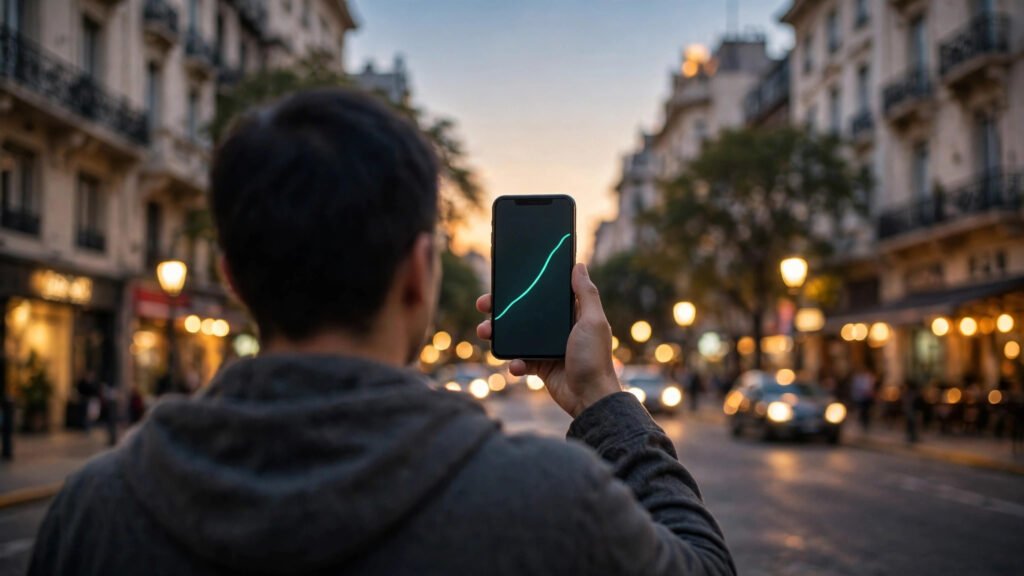
For many people in Argentina, checking the dollar rate on a phone is as routine as checking the weather. It is often one of the first things they look at in the morning, and it comes up again during the day whenever a purchase, a payment, or a saving decision is on the table. The habit can look puzzling from the outside, but inside Argentina it makes practical sense: the value of the peso against the dollar touches prices, savings, rents, travel, and even the timing of everyday spending.
Key Takeaways
- Many Argentinians check the dollar rate daily because it affects prices, savings, and spending decisions.
- Phones make the rate easy to follow anywhere, through news sites, bank apps, and exchange-rate tools.
- The daily check is less about speculation and more about protecting the value of money people already have.
This is not only a habit of traders or business owners. Students, workers, shopkeepers, and families all have reasons to glance at the rate, and the phone has made that glance almost effortless. A number that once required a trip to an exchange office or a newspaper now sits one tap away, updated through the day.
Why the Dollar Rate Matters So Much in Argentina
Argentina has lived through long periods in which prices have risen quickly and the peso has lost value against the dollar. When that happens, people learn from experience that money held in pesos can buy less tomorrow than it buys today. The dollar, by contrast, is widely seen as a steadier store of value, and it is the currency in which many larger things are priced or discussed, from property and cars to imported goods and travel abroad.
That history shapes everyday thinking. A salary, a rent payment, or a savings plan is often weighed not only in pesos but in what those pesos are worth in dollars. Checking the rate is therefore a way of checking the real purchasing power of money, not just a number on a screen. When the rate moves, people feel it in the supermarket, at the petrol station, and in the cost of anything imported.
Checking the rate is a way of checking the real purchasing power of money, not just a number on a screen.
How People Check the Rate on Their Phones
Phones have turned a once-occasional check into a constant one. News websites and finance pages publish the rate prominently, banks show it inside their apps, and dedicated exchange-rate tools send updates or alerts when the rate moves. Social media also plays a part, with the day’s rate shared widely in posts, groups, and messages within minutes of a change.
Another reason the phone matters is that more than one rate is often quoted side by side: the official rate and rates from the informal or parallel market, which can differ. People compare them because the gap between them can itself be a signal about pressure on the currency, and because different transactions may be priced with reference to one or the other. Having both figures on a phone screen makes that comparison instant.
- News sites and finance pages publish the day’s dollar rate prominently.
- Bank apps show the rate alongside accounts and transfers.
- Exchange-rate tools and alerts flag movements as they happen.
- Social media spreads the day’s rate within minutes of a change.
Why Prices and Savings Are Linked to the Dollar
The link between the dollar and daily life runs through prices. Many goods sold in Argentina are imported or contain imported parts, so when the peso weakens, the cost of bringing those goods in rises, and shop prices tend to follow. Even locally produced goods can be affected, because producers may price with an eye on replacement costs or on what they could earn by exporting instead.
Savings are linked in a similar way. People who can save often think in dollars because holding pesos through a period of fast price rises can mean watching savings shrink in real terms. That does not mean everyone buys dollars every day, but it explains why the rate is watched even by people who are not buying or selling at all: it tells them whether their money is holding its value.
Similar habits appear elsewhere in the region, where phones have changed how people handle money day to day. In Brazil, for example, instant payments have reshaped everyday transactions, as explained in our post on why Brazilians pay with Pix instead of cash and cards, while in Colombia mobile wallets have become a daily tool, as covered in our post on why Colombians pay with Nequi and Daviplata. Uruguay offers yet another variation, with card payments that return money to the user, as explained in our post on why Uruguayans get money back when they pay by card.
What the Daily Check Actually Changes
For most people, checking the rate is about timing rather than trading. Someone planning a larger purchase may bring it forward or delay it depending on which way the rate is moving. A family saving for a trip may watch the rate to judge how much their savings will cover. A small business owner may check before setting prices or ordering stock, because a sharp move can change the margin on goods already on the shelf.
The check can also bring reassurance. On a calm day, a steady rate is itself news: it suggests prices are less likely to jump suddenly. On a volatile day, knowing early gives people time to adjust plans rather than being caught out at the till. In that sense, the phone has become a small early-warning system for household budgets.
There is a psychological side too. When a currency has been unstable, uncertainty itself becomes tiring, and checking the rate is a way of reducing it. Even if the number brings bad news, knowing it feels better than guessing, and it lets people make decisions with open eyes.
What to Watch Next
The habit of checking the dollar rate is unlikely to fade while prices and the currency remain closely linked in daily life. What may change is how people check: bank apps, payment tools, and news alerts keep making the rate easier to follow, and the gap between official and parallel rates will remain something people compare. For now, the morning glance at the phone remains a small but telling ritual of Argentine life, a daily reminder of how closely a currency number is tied to the price of everything else.