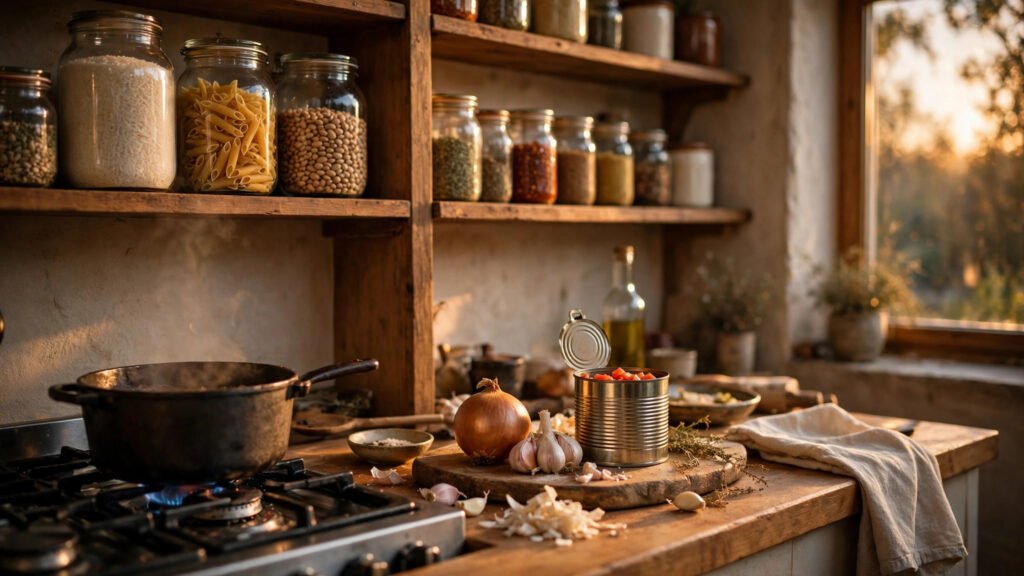
It is six in the evening, the fridge looks empty, and nobody wants another takeaway. Before you order food, open your cupboards instead. You probably already have dinner hiding in there — rice, pasta, tinned beans, a few spices — and a short chat with an AI tool can help you turn those odds and ends into a real meal. Learning how to turn pantry ingredients into dinner ideas with AI is mostly about asking clearly, not about fancy cooking skills.
The idea is simple. You tell the tool what you have, what you cannot eat, how much time you have, and what equipment is available. It suggests combinations you might not have thought of, and you pick the one that sounds good. You stay in charge of the cooking; the AI only helps with the idea.
Key Takeaways
- List what you actually have before asking AI for dinner ideas, including staples, spices, and anything that needs using up first.
- A clear prompt — ingredients, time, diet limits, and servings — gives far more useful suggestions than a vague question.
- Always check cooking times, allergies, and ingredient amounts yourself before you start cooking.
Start With What You Actually Have
Most pantry dinners fail before they start because the cook guesses at what is in the cupboard. Spend two minutes looking. Check the rice, pasta, noodles, and grains. Then look at tinned food: beans, chickpeas, tomatoes, tuna, or coconut milk. Add sauces, oils, and spices, and note anything fresh that needs using up, like half an onion or a softening pepper.
Write the list down, even roughly. You do not need exact weights — “a tin of chickpeas, rice, cumin, garlic, one onion, and tinned tomatoes” is plenty. This list is the raw material for everything that follows, and it stops the tool from suggesting meals built on ingredients you do not own.
How to Ask AI for Pantry Ingredients Into Dinner Ideas
A vague prompt like “what should I cook tonight?” gives vague answers. A better prompt has four parts: what you have, how long you have, how many people you are feeding, and anything to avoid. For example: “I have rice, chickpeas, tinned tomatoes, cumin, and garlic. I have 30 minutes and I am cooking for two. No dairy. Suggest three dinner ideas using only these ingredients plus oil and salt.”
Ask for the method in steps, not just a dish name. A useful reply tells you what to cook first, how long each part takes, and what to season with. If the first answer does not fit, narrow it down: ask for a one-pot version, a spicier version, or a version that uses the ingredient you most need to finish. One or two follow-up questions usually turn a rough idea into a plan you can actually cook.
If you want to plan further ahead, you can build on the same habit. Once you know what works for one evening, the same approach scales to a whole week — our guide on using AI to plan weekly meals shows how to stretch a single idea into a simple weekly routine.
Check the Suggestion Before You Cook
AI tools are helpful, but they are not cookbooks and they do not know your kitchen. Read the whole suggestion before you switch the stove on. Check that the cooking times make sense, that nothing is undercooked, and that no ingredient clashes with an allergy or a dietary need in your household. If a quantity looks wrong — a whole tablespoon of chilli for two people, for instance — trust your judgement and adjust it.
You stay in charge of the cooking; the AI only helps with the idea.
It is also worth checking the basics yourself: rice needs enough water and time, beans from a tin need rinsing, and raw meat, if you use any, needs to be cooked through. Treat the AI suggestion as a starting point, not a set of instructions you must follow exactly. This is general information for everyday home cooking, not professional dietary advice.
Make It Work for Different Diets and Budgets
Pantry cooking suits tight budgets because it starts from food you have already bought. Beans, lentils, rice, and pasta are filling and inexpensive, and a meal built around them usually costs less than a delivery order. If you are watching spending, say so in your prompt and ask the tool to avoid suggesting extra ingredients you would need to buy.
The same approach adapts to different eating styles. Ask for a vegetarian version, a dairy-free version, or a version with more protein, and the tool can rework the same ingredients. For more ideas on stretching a food budget, see our guide on eating more protein on a budget, which pairs well with pantry-based meals.
- One-pot meals save washing up and suit small kitchens.
- Spices and sauces change a plain base — the same rice can taste completely different twice in one week.
- Use up the oldest ingredients first to cut food waste.
- Keep a short list of your ten most-used pantry staples so future prompts get faster.
A Simple Pantry Dinner Formula to Reuse
When you are stuck, fall back on a formula: one grain or starch, one protein, one sauce or spice mix, and one vegetable, fresh or tinned. Rice plus chickpeas plus spiced tomatoes plus an onion is a meal. Pasta plus beans plus garlic, oil, and chilli is another. Once you have cooked a few of these combinations, you will start seeing them yourself without needing to ask at all.
Small seasoning habits make the biggest difference. Taste as you go, add salt gradually, and finish with something fresh or sharp — lemon juice, herbs, or a splash of vinegar — if the dish tastes flat. These are the same basics behind everyday home cooking, and reducing salt in home cooking is easier when you season in stages rather than all at once.
What to Watch Next
Pantry cooking gets easier with practice. The next time you are short on ideas, list what you have, ask clearly with your time and diet limits, and check the suggestion before cooking. Over a few weeks, you will build a small set of reliable meals from ingredients you already keep at home — and the evening question of what to cook will get a little less stressful.