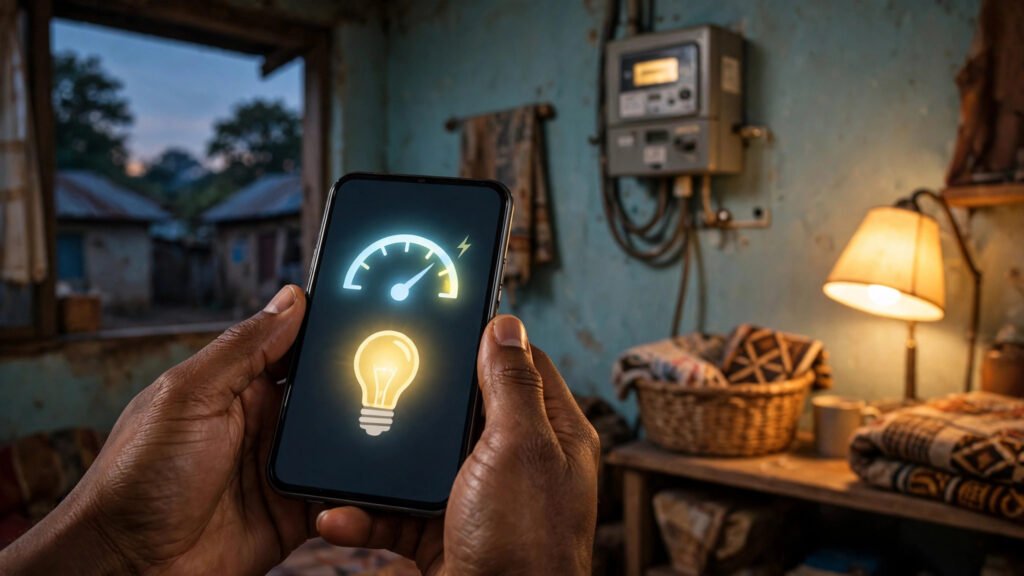
In many Zambian homes, the moment the lights start to flicker or a meter starts beeping a warning, nobody reaches for a jacket to head to an office. They reach for a phone. A few taps, a mobile money payment, and a token code arrives that can be typed into the meter to restore power. For a growing number of households, that small routine has replaced a trip across town.
It is a practical answer to a very everyday problem. Electricity is not something a household can put off until tomorrow. When units run low in the evening, the family still needs light for homework, cooking, and charging phones. Buying units on a phone means the problem can be solved at the moment it appears, even late at night or on a weekend, without waiting for an office to open.
The shift also fits how many Zambians already handle money. Mobile money wallets are a normal part of daily life for paying for goods, sending money to family, and settling small bills. Adding electricity units to that same habit feels natural. There is no separate journey, no separate queue, and no need to carry cash to a counter.
Key Takeaways
- Buying electricity units on a phone solves an urgent household need at the moment it appears, including evenings and weekends.
- Prepaid meters let households buy only what they can afford at the time, which makes budgeting for power easier to manage.
- Mobile money, agents, and bank apps give households more than one way to buy units without travelling to an office.
How Prepaid Power Changed the Routine
Under a prepaid system, a household pays for electricity before using it. The meter shows how many units remain, and when the balance runs low, the household buys more. That simple change shifted control from a monthly bill that arrives after the power has been used to a balance the family can watch and manage day by day.
For households on a tight budget, that visibility matters. A family can buy a smaller amount when money is short and a larger amount when payday arrives, rather than facing one large bill at the end of the month. It also removes the surprise of an unexpectedly high bill, because spending on power is decided in advance.
Buying through a phone makes that control even easier. The balance can be checked, the payment can be made, and the token can be received without leaving the house. For a parent who is cooking, a student who is studying, or a shopkeeper who is serving customers, that saved trip is time back in the day.
Why the Phone Became the Easiest Counter
The phone works because it is already in the pocket. Mobile money services run by the country’s main mobile networks let users pay for units directly from a wallet, while banks and other apps offer a similar route for customers who prefer to pay from an account. In areas where a smartphone or a data connection is not available, basic phones can still complete many of these payments through menu-based services, so the habit is not limited to one kind of handset.
Agents play an important part too. In markets, bus stops, and neighbourhood shops, mobile money agents help customers who want to pay in cash or who need a hand with a transaction. That agent network means even a household without its own wallet can still buy units through a neighbour’s shop rather than travelling to a utility office.
There is also a safety and record-keeping benefit. A phone payment leaves a message or a receipt that can be checked later, which is easier to keep than a paper slip that can be lost. If a token does not arrive or a number is typed wrongly, the household has something to show when asking for help.
Buying through a phone makes that control even easier, because the balance can be checked, the payment can be made, and the token can be received without leaving the house.
What Makes Zambia’s Case Different
Zambia’s electricity story has an extra layer. The country has faced periods when power supply is under strain, and households have learned to watch their usage more closely. When supply is uncertain, knowing exactly how many units remain — and being able to top up quickly — gives a family a sense of control over something that can otherwise feel unpredictable.
Distance matters as well. Zambia is a large country, and not every household lives near a utility office. For families in smaller towns and rural areas, a trip to town costs transport money and a large part of the day. Buying units on a phone removes that journey entirely, which is why the habit has spread well beyond the big cities.
The same phone-first logic shows up across the region. In Kenya, for example, mobile money has become the everyday way to pay, while in Malawi, keeping a phone charged is itself a daily task that shapes how people plan their day. Zambia’s electricity habit belongs to that same wider pattern of phones quietly taking over errands that once needed a queue.
The Limits of Buying Power by Phone
The phone route is not perfect. A transaction can fail when the network is weak, a token message can arrive late, and a mistyped meter number can send units to the wrong meter. Households also need a charged phone and enough balance in a wallet or account, which is not always the case at the end of a long week.
There is a learning curve too. Older family members or first-time users may need help the first few times they buy units, and a household that shares one phone must agree on who controls the wallet. Agents and family members often fill that gap, showing a new user the steps until the routine feels familiar.
- Prepaid meters turn electricity into a balance households can watch and top up in small amounts.
- Mobile money wallets, bank apps, and local agents all offer a way to buy units without an office visit.
- A phone receipt or message gives the household a record to check if a token goes missing.
- Network problems, mistyped numbers, and a flat phone battery remain the most common frustrations.
Why the Queue Is Unlikely to Come Back
Once a household has bought units from its own living room, going back to a queue feels like a step backwards. The phone route saves time, fits around work and school, and lets families decide exactly how much power to buy and when. That combination is hard to beat, even for households that still visit an office for other services.
It also changes how families think about electricity itself. Power stops being a bill that arrives once a month and becomes a household item that is managed like airtime or groceries — bought in amounts that suit the week, watched as it is used, and topped up before it runs out. For many Zambians, that shift in control is the real reason the phone won.
Across the continent, the same convenience is reshaping other payments too, from QR code payments in Cambodia to mobile money habits in East and Southern Africa. The tool changes from country to country, but the question behind it is the same: why travel and queue when the phone in your pocket can do the job?
What to Watch Next
The next step for Zambia’s phone-bought power is wider convenience rather than a new invention. More households are likely to buy units through the apps and wallets they already use, agents will keep helping customers who prefer cash or a guided transaction, and families will keep watching their meter balance as a normal part of managing the home. The queue at the office may not disappear entirely, but for everyday top-ups, the phone has already become the counter most Zambians reach for first.