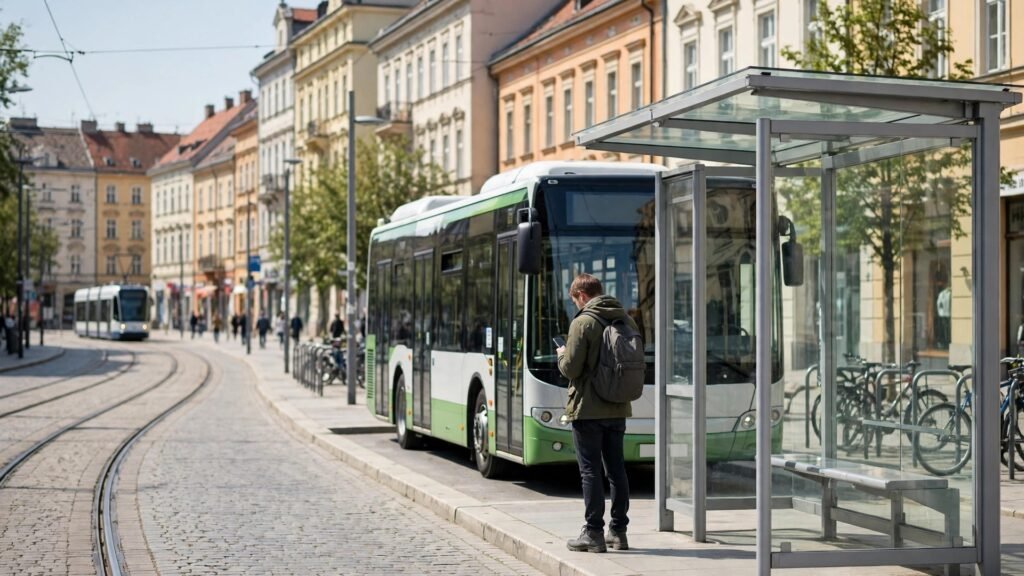
Across Slovakia, the phone has quietly become the ticket wallet. For many travellers, the journey now starts not at a ticket window or a vending machine, but on a screen: a train seat reserved in an app, a city bus ticket bought before boarding, or a parking session started from the kerb. It is a small change in habit, but it has reshaped how people move through Slovak towns and cities, from the morning commute in Bratislava to a weekend train ride across the country.
The shift did not happen because Slovaks stopped liking paper. It happened because the phone solved everyday frictions that paper could not. A ticket bought on a phone cannot be left at home, it can be bought at the last minute, and it can be checked without digging through a bag. For transport operators, it also means fewer queues at windows and less cash handling on board. For passengers, it means one device for planning, paying and proving the journey.
Key Takeaways
- Slovaks increasingly buy train, bus and parking tickets on their phones because it removes queues, lost paper tickets and last-minute scrambles.
- Long-distance travel went mobile first, while city transport and parking followed as apps, contactless cards and on-board validation spread.
- Paper tickets and ticket windows still matter, especially for visitors, older passengers and places where mobile coverage or payment options are limited.
A Ticket That Lives in Your Pocket
The simplest reason for the change is convenience. A phone is already in the passenger’s hand, and a ticket inside it is always at hand too. Buying before departure avoids the risk of arriving at a station to find a long queue, and it lets travellers compare departure times and connections while they are still deciding. Once bought, the ticket is stored in the app or as a code that can be shown to a conductor or inspector, which makes the whole boarding process faster.
There is also a practical benefit on the move. Plans change: a meeting runs late, a connection is missed, or a trip is brought forward. Changing or rebooking a mobile ticket is usually quicker than returning to a window, and the new ticket appears straight away. That flexibility suits a country where many people commute between towns for work and study, and where a single day can involve a train, a city bus and a walk in between.
A ticket bought on a phone cannot be left at home, it can be bought at the last minute, and it can be checked without digging through a bag.
Why Trains and Long-Distance Buses Went Mobile First
Long-distance travel was a natural first step. Train and intercity bus journeys are usually planned in advance, they involve a specific departure time, and passengers often want a seat rather than just a ride. Booking those journeys on a phone fits the way people already plan trips: checking times, choosing a departure, and paying in one flow, then arriving at the platform with everything ready.
Mobile booking also helps on routes where ticket windows are few, opening hours are short, or the station is small. A passenger boarding at a quiet halt does not need to worry about whether a window is open, because the ticket is already on the phone. And for the operator, a digital sale leaves a clear record of the journey, which makes refunds, changes and customer support simpler than handling a lost paper ticket.
City Transport and the Daily Commute
In Slovak cities, the phone has become part of the daily commute in a different way. City buses, trams and trolleybuses carry people on short, repeated trips, so the ticket needs to be quick to buy and easy to renew. Mobile tickets, travel cards topped up online, and contactless bank cards used at validators all serve that need, depending on the city and the operator. The common thread is the same: less time spent on buying, more time spent on travelling.
Commuters also value the way a phone brings the whole journey together. Timetables, delays and route changes sit next to the ticket itself, so a passenger can check whether the next bus is on time before leaving home. That is a quiet but real improvement over a paper timetable pinned to a shelter, especially in winter, when waiting on a cold platform is nobody’s idea of a good start to the day. Similar habits are visible elsewhere in Europe, where Latvians pay for parking and bus tickets on their phones and Greeks run island life and ferry travel from their phones.
Parking Without the Machine
Parking is the other half of the story, and it may be where the phone saves the most hassle. Anyone who has hunted for coins, found a machine out of order, or returned to a car to extend a ticket knows the frustration. Paying for parking from a phone removes that walk to the machine, and in many systems the session can be extended remotely or stopped when the driver leaves, so the driver pays for the time actually used rather than guessing in advance.
For towns and cities, phone parking also cuts down on street furniture and cash collection, and it gives a clearer picture of how parking spaces are used. For drivers, the benefit is simpler still: the car, the payment and the reminder all live in the same device. It is the same logic that has made phone payments popular across the continent, from everyday shopping to Finns paying with MobilePay instead of cash and cards.
- Mobile tickets remove queues at windows and the risk of a lost paper ticket.
- Long-distance trains and buses suit phone booking because journeys are planned and seat-based.
- City transport benefits most from fast, repeatable tickets for daily commuters.
- Phone parking ends the hunt for coins and lets drivers extend or stop a session remotely.
- Paper tickets, windows and staffed help still matter for visitors and anyone without a suitable phone or payment method.
What Still Needs Cash or a Card
The phone has not replaced everything, and it should not be expected to. Not every passenger has a smartphone, a payment card linked to it, or a reliable mobile signal at the moment of travel. Visitors may not know which app their destination uses, and older passengers may simply prefer a window and a printed ticket. In rural areas and on smaller routes, the choice of mobile options can also be narrower than in a big city.
That is why the healthiest version of this change is a mixed one: mobile tickets as the easy default, with paper, cards and staffed help kept available for everyone else. A transport system works when every passenger can board with confidence, not only the ones with the newest phone. The goal is fewer barriers to travel, not a new barrier dressed up as progress.
What to Watch Next
The direction of travel is clear: more journeys booked, validated and paid for on the phone, with city transport, parking and long-distance tickets joining up in fewer apps rather than more. What matters next is whether that joining-up actually happens, whether paper and staffed options stay available for those who need them, and whether smaller towns get the same easy choices as the big cities. If those three things hold, the phone will keep its place as Slovakia’s pocket ticket wallet, not by forcing anyone to use it, but by being the simplest way to get moving.