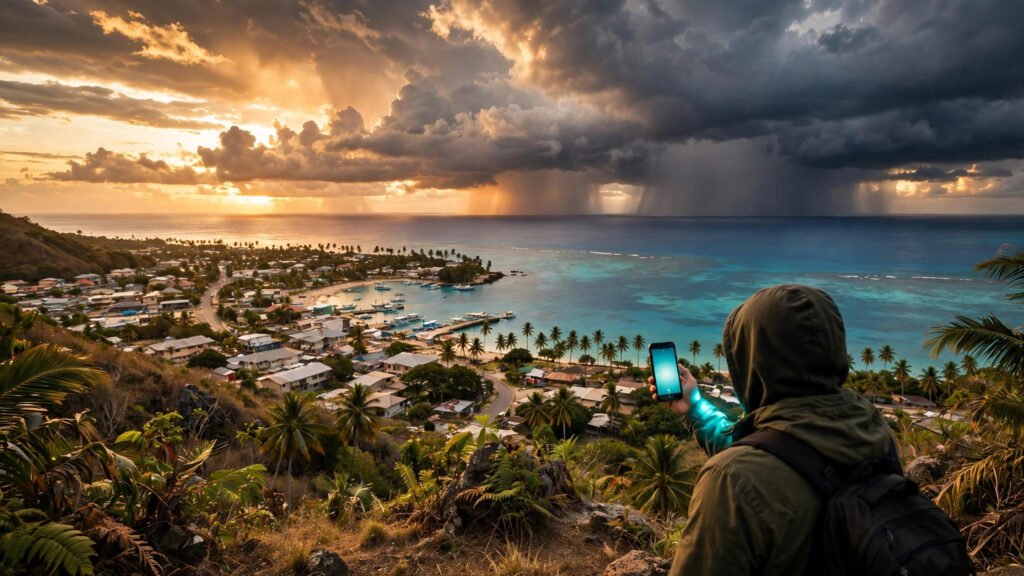
On Guam, a phone is rarely just a phone. It is a weather radio, a bus timetable, a family group chat, a boarding pass, a map of a small island with long memories of big storms, and a way to stay in touch with relatives far across the Pacific. That is why so many Guamanians reach for their phones first, whether the sky is clear over Tumon Bay or darkening ahead of a typhoon.
Guam is a United States territory in the western Pacific, a long, narrow island where most daily life happens within a short drive of the sea. Villages, schools, shops, beaches, military bases and hotels sit close together, yet the ocean around the island is vast. A phone bridges that contrast: it keeps a small island connected to a very large region.
Key Takeaways
- Guamanians rely on phones because the island is small, the ocean is vast, and storms can change plans quickly.
- During typhoon season, phones carry warnings, shelter information, family check-ins and updates when power and roads are disrupted.
- For travel, work and family life, phones connect Guam to Hawaii, Asia and the United States mainland, and to relatives living far away.
An Island Where Weather Can Change Everything
The most serious reason Guamanians keep their phones close is the weather. Guam lies in a part of the Pacific where tropical storms and typhoons form, and islanders grow up learning to watch the sky and the forecast together. When a storm approaches, official warnings, school closures, flight changes and shelter information travel fastest through phones.
Families use group chats to check on parents, children and elderly relatives in different villages. Neighbours share road conditions, shop opening times and news about water and power restoration after a storm passes. In a place where a single storm can affect the whole island at once, that shared, instant picture matters more than any single announcement.
Phones also help after the storm. People photograph damage for insurance or repair work, look for open petrol stations and stores, and let relatives overseas know they are safe. A charged phone, and a way to charge it, becomes part of storm preparation itself, alongside water, food and a plan for where to go if conditions worsen.
On Guam, a charged phone is part of storm preparation itself, because it is how warnings, family check-ins and recovery news travel fastest.
Islanders in other storm-prone places face the same pattern. In Puerto Rico, for example, residents have learned to lean on their phones for power outages during hurricane season, when the grid and the daily routine are disrupted at the same time.
Travel Is Part of Everyday Life
Travel shapes phone habits on Guam in a second, everyday way. The island is a destination for visitors, especially from Japan and South Korea, and it is also a home base from which residents travel for work, study, medical care, shopping and family visits. Flights connect Guam with Hawaii, the United States mainland and cities across Asia, and a phone holds the whole journey: tickets, hotel bookings, maps, translation tools and messages to hosts and family.
For visitors, the phone is a guide to beaches, restaurants, hiking trails, historical sites and village fiestas. For residents, it is a way to compare flight options, keep boarding passes in one place and stay reachable while away. Because Guam is an island, almost every longer journey starts with a flight, and that makes digital tickets and real-time flight updates especially useful.
Work adds another layer. Guam’s economy blends tourism, military activity, government services, retail and construction, and many jobs involve shift work, multiple locations or coordination across teams. Phones carry schedules, work messages, delivery updates and customer contact, so a worker can move between sites without losing the thread of the day.
A Small Island With Far-Flung Families
Family is perhaps the deepest reason phones matter so much on Guam. Chamorro culture places great value on family, respect for elders and community gatherings, and many Guamanian families now live across great distances. Children study overseas, relatives serve in the military, and family members move to Hawaii or the mainland United States for work. A video call can close a gap of thousands of miles in a second.
Social media and messaging apps carry birthdays, graduations, village news and fiesta photos to relatives who cannot be present in person. Older relatives who once relied on landlines and letters now appear in family group chats, and younger relatives help them stay connected. The phone becomes a family room that travels.
That connection also runs in the other direction. Relatives abroad send money, advice and encouragement home through phones, and islanders share news of home outward. On an island where leaving often means crossing an ocean, staying close takes effort, and the phone makes that effort possible every day.
- Typhoon warnings, shelter news and family check-ins travel fastest by phone.
- Flights, hotels and maps for island travel live in one device.
- Video calls keep far-flung Guamanian families close across the Pacific.
- Work schedules, deliveries and customer messages run through phones across villages and job sites.
Why Phones Fit Island Geography
Guam’s geography itself pushes people toward phones. Distances on the island are short, but the surrounding ocean is enormous, and services can be spread across villages. Rather than driving from place to place to ask whether a shop is open or a clinic has appointments, many people check first on their phones. That saves time, fuel and frustration, especially when a journey means crossing the island in heavy rain or holiday traffic.
Island life also means that some services arrive by sea or air, and availability can change. Phones help people track deliveries, bookings and appointments without repeated trips. In the same way, residents of other scattered island communities rely on phones to bridge distance, as Faroe Islanders rely on phones across scattered North Atlantic islands, where sea and weather shape daily plans.
Small islands share another trait: everyone is, in a sense, a neighbour. News travels quickly, and phones speed it further. A village event, a road closure, a lost pet or a community fundraiser can reach hundreds of people in minutes. That speed strengthens community life, even as it also means rumours can spread, which is why official updates and trusted local sources matter during emergencies.
Tourism, Language and Daily Convenience
Tourism makes phones even more central. Visitors arrive speaking different languages, and translation apps, maps and review platforms help them navigate the island. Hotels, restaurants, tour operators and car rental firms communicate with guests through messages and bookings, and many small businesses depend on social media to be found at all. A visitor’s phone is often their first guide to Guam, and a local business’s phone presence is often its shop window.
Language itself is part of the story. English and Chamorro are both part of island life, and phones carry both: Chamorro words and phrases appear in messages, music, videos and cultural posts, while English dominates official information, tourism and work communication. For younger Guamanians, phones are also a place where culture is shared and learned, through songs, stories and family videos.
Daily convenience completes the picture. Banking, bill payment, shopping, food delivery, school messages and government updates increasingly arrive through apps and messages. On a small island, where a single errand can still take a meaningful part of the day, doing it from a phone leaves more time for family, work and the outdoors. Life on other small islands, such as Montserrat, where a volcano divides the island, shows the same logic: when geography complicates movement, the phone becomes the shortcut.
What to Watch Next
Guamanians will keep relying on their phones for the same three reasons this article describes: storms that demand fast warnings and family check-ins, travel that links a small island to a vast region, and family ties that stretch across the Pacific. As connectivity, apps and storm-warning systems develop, the phone’s role in island life is likely to grow, not shrink. The question for the island is not whether phones matter, but how to keep them charged, connected and trustworthy when the weather turns, the flights change, or a family member far away simply needs to hear a familiar voice.