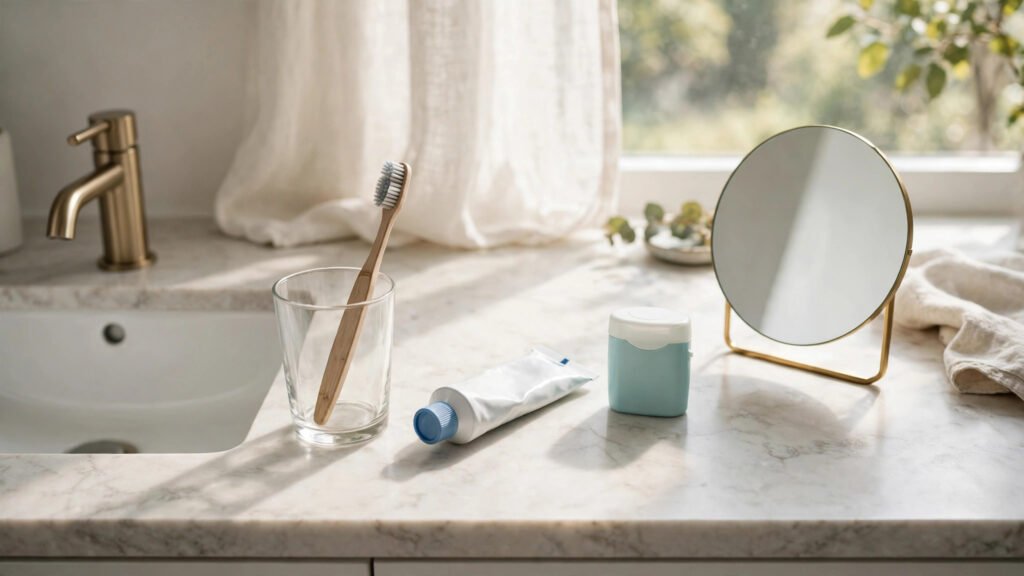
Learning how to take care of your teeth at home is mostly about small habits repeated every day, not about expensive products or complicated routines. Brushing, cleaning between your teeth, making sensible food and drink choices, and keeping regular dentist visits all work together to keep your mouth comfortable and your smile in good shape. None of these steps takes long on its own, but together they make a real difference over months and years.
Key Takeaways
- Brush twice a day and clean between your teeth once a day, using a gentle technique rather than force.
- Food and drink choices matter: frequent sugary snacks and acidic drinks give your teeth more to cope with.
- Keep regular dentist visits, and ask about anything that feels different instead of waiting for it to get worse.
How to Take Care of Your Teeth Every Day
The simplest routine is also the most reliable one. Brush in the morning and again before bed, and clean between your teeth once a day. Doing these steps at roughly the same times each day turns them into habits you do not have to think about, which is exactly why they last. If you only remember one part of this article, remember this: consistency beats intensity. A gentle routine done every day protects your teeth far better than a perfect routine done once in a while.
It also helps to keep your tools in good shape. Replace your toothbrush or brush head when the bristles start to spread out or bend, and keep your brush somewhere it can air-dry between uses. A worn brush does a poorer job, and a damp brush stored in a closed container stays damp for longer than it needs to.
Brushing Well Matters More Than Brushing Hard
Many people brush too hard, thinking that extra pressure means extra clean. In fact, gentle brushing with a soft brush is usually the better choice. Hold the brush at a slight angle where your teeth meet your gums, and use short, gentle strokes to cover the outer, inner, and chewing surfaces of every tooth. Take your time: two minutes gives you enough time to reach every area without rushing.
Try to avoid brushing straight after eating or drinking something very acidic, such as citrus juice or fizzy drinks. Your teeth are temporarily softer after acid exposure, so waiting a little while before brushing is kinder to them. Rinsing your mouth with plain water first is a simple middle step while you wait.
Do Not Skip the Spaces Between Your Teeth
A toothbrush cleans the surfaces it can reach, but it cannot fully clean the tight spaces where two teeth meet. That is where floss or interdental brushes come in. Cleaning between your teeth once a day removes food and plaque from places your brush misses, and it is one of the easiest habits to add once you get used to it.
If floss feels awkward at first, that is normal. Try a different type — waxed floss, tape, or small interdental brushes — and see which one feels easiest for you. The best tool is the one you will actually use every day. Be gentle as you work: the aim is to clean the sides of the teeth, not to force anything into your gums.
Food and Drink Choices That Protect Your Teeth
What you eat and drink affects your teeth, and frequency matters as much as quantity. Sipping a sugary drink slowly over several hours, or snacking on sweets again and again through the day, keeps your teeth under repeated attack. It is generally kinder to enjoy sweet foods with meals rather than as constant snacks, and to drink water between meals.
Building balanced meals helps here too, and learning how to build a balanced plate makes everyday eating simpler rather than stricter. Crunchy vegetables, plain dairy foods, and whole foods that need chewing all fit naturally into a tooth-friendly pattern, and planning meals ahead — for example, how to pack a healthy lunch for work — reduces the chances of reaching for sugary snacks when you are hungry and in a hurry. Cutting back on added salt in cooking, as explained in how to reduce salt in home cooking, is a separate health habit, but the same home-cooking mindset — cooking more meals yourself — gives you more control over what goes into your food.
- Drink water between meals and keep sugary drinks for mealtimes when you have them.
- Choose snacks that do not stick to your teeth for hours.
- Give your teeth breaks between eating occasions instead of grazing all day.
- Finish sweet or acidic foods with a rinse of plain water.
Small Habits That Add Up Over Time
A few everyday habits are worth watching. Using your teeth to open packets, bite nails, or chew very hard objects such as ice can chip or crack them, and a cracked tooth is much harder to deal with than a packet is worth. If you play contact sports, a mouthguard is a simple piece of protection that many dentists recommend for general safety.
Smoking and tobacco products also affect the mouth, staining teeth and irritating gums, so cutting down or stopping is one of the most helpful changes you can make for your mouth as well as your general health. And if you notice that you grind your teeth at night — for example, you wake with a sore jaw — it is worth mentioning to your dentist at your next visit rather than trying to diagnose it yourself.
When to See Your Dentist
Home care and professional care go together. Regular check-ups let a dentist spot small changes early, when they are usually simpler to deal with, and a professional clean reaches areas that home brushing cannot. How often you need to go depends on your own situation, so follow the interval your dentist suggests for you.
Between visits, pay attention to changes: a tooth that feels sensitive for more than a short while, gums that bleed often when you brush, a sore that does not heal, or a tooth that feels loose. This article is general information only, not medical advice, and it cannot diagnose any of these things — but noticing a change early and asking a professional about it is always the sensible step. Do not wait for a small worry to become a painful problem.
Consistency beats intensity. A gentle routine done every day protects your teeth far better than a perfect routine done once in a while.
What to Watch Next
Taking care of your teeth at home comes down to the same few habits: brush gently twice a day, clean between your teeth once a day, make food and drink choices that give your teeth breaks, avoid using your teeth as tools, and keep regular dentist visits. Start with the habit that feels easiest, add the next one when the first feels automatic, and give the routine time to settle. Your future self — and your smile — will be glad you kept it simple and kept it going.