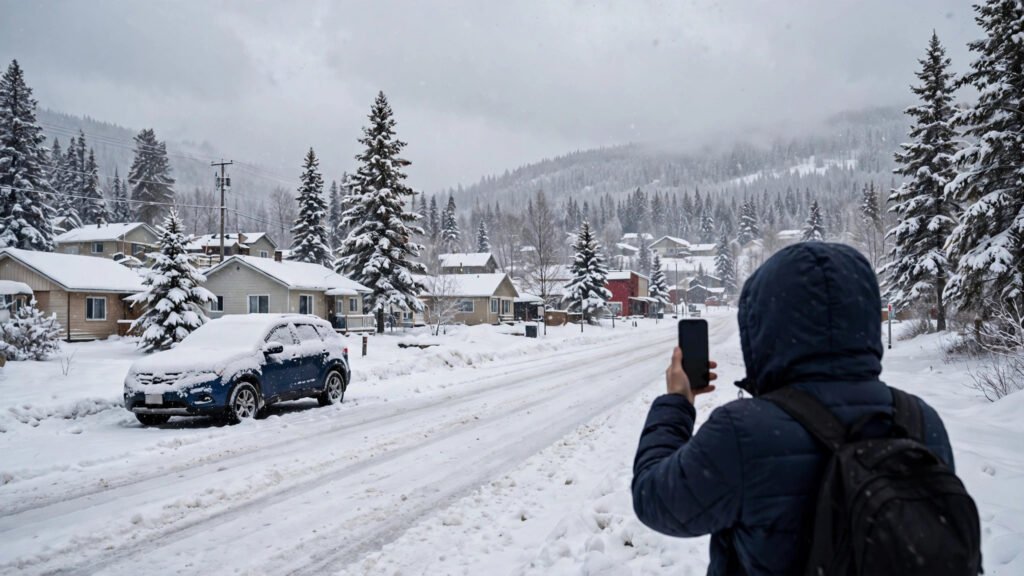
In much of Canada, the winter driving routine starts before the car does. A driver stands by the window, clears a patch of frost, and checks a phone. The question is simple: is this a normal winter drive, or is it a day to wait, change the route, or leave much earlier? That one check has become a habit because Canadian winter weather can change quickly, and the difference between a manageable trip and a miserable one is often decided in the first hour after the snow starts.
For Canadians, checking a phone for a winter storm or snow alert is not really about the forecast for the whole week. It is about the next few hours on one particular road. A storm can be heavy in one valley and light in the next town. A highway can be clear in the morning and snow-covered by lunch. A phone gives a driver that local, up-to-date picture in a way a single morning forecast cannot.
Key Takeaways
- Canadians check winter storm and snow alerts for the next few hours on their own route, not just the general weekly forecast.
- Phones combine weather alerts, road conditions and route updates in one place, so a driver can delay, reroute or leave earlier before setting off.
- The check works best when it is done before driving, with the phone put away once the car is moving.
Why Winter Driving in Canada Is Different
Canada is a large country, and winter does not arrive everywhere in the same way. Coastal areas may deal with wet snow and rain that turns to ice. Prairie regions may face blowing snow that cuts visibility even when not much new snow is falling. Mountain passes can bring sudden changes in temperature, snow and road surface within a short drive. A driver therefore needs information that fits the place they are actually driving through, not just the nearest big city.
Distance matters too. Many Canadian trips are long, with stretches of road between towns where help, fuel and shelter are farther apart than a driver might expect. On a short city trip, a driver can usually turn back. On a longer highway trip, turning back may not be easy once conditions worsen. That is why the check happens before departure: it is the moment when changing plans is still simple and safe.
Winter driving also involves more than snow on the road. Freezing rain can coat a road in ice. Strong wind can push snow back across a cleared road. Low temperatures can affect a vehicle, a battery and a driver’s own comfort on a long wait. An alert that mentions several of these risks at once tells a driver that the trip needs more care than a day with light, steady snow.
What a Winter Storm Alert Actually Means
Environment and Climate Change Canada issues weather alerts that help people understand what is expected and how soon it may happen. A watch generally means conditions may develop that could be hazardous. A warning generally means hazardous weather is happening or is expected soon. The wording matters because it tells a driver whether to keep an eye on the situation or to act on it now.
For a driver, the useful details are usually the timing, the area and the type of hazard. Timing shows whether the worst weather will arrive before, during or after the planned trip. Area shows whether the route itself is affected or only a neighbouring region. The type of hazard shows whether the main problem will be heavy snow, freezing rain, blowing snow, extreme cold, or a mix of these. A driver who reads those three details can make a better decision than a driver who only sees a snow symbol on a screen.
Alerts are updated as conditions change. A storm may arrive earlier than first expected, or it may weaken. A road that looked passable in the morning may be described differently by the afternoon. That is one reason the phone check is often repeated: once in the morning, again before leaving, and sometimes once more before a return journey. The phone is useful precisely because it can carry the latest version, rather than a forecast printed hours earlier.
In Canada, the phone check is not about curiosity — it is the last look before a winter road makes the decision for you.
How Canadians Check Before They Leave
Most drivers start with a weather app or the weather service’s own alerts for their location. Many use the WeatherCAN app or a weather website to see active alerts for the area they live in and the area they are travelling to. Some set notifications so that a new warning for their home area reaches them without them having to search for it. The key step is checking both ends of the journey, because the weather at the destination can be very different from the weather at home.
Next, many drivers check road conditions. Provincial and territorial traveller information services, often reached through 511 services and websites, report road closures, construction, collisions and winter road conditions. These services describe what drivers are actually facing on the road, which is different from what the sky is doing. A road can still be snow-covered after the snow has stopped, and a road can be icy even when no new snow is falling.
Some drivers also check a mapping app for route and traffic information. A mapping app may show a slower route, a closure or heavy traffic that suggests a problem ahead. Used together, the three sources — weather alert, road condition report and route update — give a fuller picture than any one of them alone. A driver might learn that snow is expected, that a highway section is already partly covered, and that an alternative route is moving better. That combination is what turns a vague worry into a clear plan.
People who travel the same route often, such as commuters and truck drivers, build the check into their routine. They know which passes close first, which stretches drift shut in wind, and which alternative roads are usually cleared sooner. For them, the phone is a way to confirm what experience already suggests. For a visitor or a new resident, the phone is even more important, because local knowledge has not yet been built up.
What Drivers Change After Checking
The most common change is timing. A driver may leave earlier to avoid the heaviest snow, delay departure until a storm passes, or postpone a non-essential trip to another day. Timing is often the safest change because it avoids the worst conditions altogether, rather than trying to drive through them.
The second change is route. A driver may choose a main highway that is more likely to be ploughed over a smaller road that may not be cleared as often. In mountain areas, a driver may avoid a high pass during a storm and take a lower route instead. In other cases, the best choice is to stay on the planned route but allow much more time, because traffic will be slower and stops may be needed.
- Check alerts for both the starting point and the destination, not just home.
- Combine a weather alert with a road condition report before deciding.
- Leave earlier, delay or reroute when an alert covers your route — and never check a phone while driving.
- Keep the car ready for winter: cleared windows and lights, enough fuel, and a basic emergency kit.
The third change is preparation. A driver who knows snow is coming will clear snow and ice from the whole car, not just a small patch on the windscreen. They will check that lights are visible, that washer fluid is topped up, and that the car has enough fuel for a slower journey. Many drivers also carry a basic winter kit, including a warm blanket, a shovel, a flashlight and a phone charger. These steps are simple, but they matter most on the days when a short delay could turn into a long wait.
Winter tyres are part of that preparation for many Canadian drivers. Some provinces and territories require winter tyres during the winter season, while in others their use is strongly recommended. A driver who checks an alert and knows a storm is coming is more likely to have winter tyres fitted in good time, rather than discovering the need on the first snowy morning.
Why Phones Beat a Single Forecast
Television and radio still play a role in Canadian winter weather, especially for broad warnings and school or road closure announcements. But a phone adds three things that older sources cannot easily match: location, updates and routes. A phone can show alerts for the exact area a driver is in, update them as the storm moves, and link them to the road the driver plans to use.
That link to the route is important. Checking bus and train times on a phone has become normal in other countries for the same reason: people want travel information that fits their own journey. In Canada, the equivalent is checking whether a specific highway is open, snow-covered or closed, rather than hearing a general forecast for a whole province.
Phones also help when plans change during the day. A driver who checked in the morning may need to check again before driving home, because a storm that was expected in the evening may have arrived early. A passenger can check on behalf of the driver, or the driver can pull over safely to look. The rule that matters most is simple: the phone is for before the drive and for safe stops, never for use while driving.
Why the Habit Matters Beyond One Trip
In other parts of the world, people check their phones for hazards that fit their own landscape. Phone alerts for sudden hazards help New Zealanders respond to earthquakes and tsunami warnings, while seasonal wildfire alerts in Portugal shape summer travel plans. In Canada, the equivalent seasonal habit is the winter storm check. Each country has its own risks, but the pattern is the same: a phone turns a general warning into a personal decision.
For Canadian communities, that habit also reduces pressure on emergency and road services. A driver who delays a trip does not need rescue from a closed road. A driver who takes a main highway instead of a remote road is easier to reach if help is needed. A driver who leaves earlier is less likely to be caught in the worst of a storm. Individual choices, repeated across many drivers, make winter roads safer for everyone.
There are limits to the phone check, and drivers know them. Mobile coverage can be weak in remote areas, so a driver should check before entering a stretch with poor signal. A phone battery can run down in cold weather, so a charger in the car is part of winter preparation. An alert can also be misunderstood if a driver only reads the headline and misses the timing or the area. The safest approach is to read the full alert, check the road report, and then decide — not to rely on a single notification.
Winter in Canada will always bring days when driving is difficult. Snow, ice and wind are part of the season, not exceptions to it. The phone check does not remove those risks, but it gives a driver time to respect them. It turns a journey from a guess into a plan, and that is why it has become one of the most ordinary — and most useful — winter habits in the country.
What to Watch Next
As winter progresses, the habit described here will stay the same: check the alert, check the road, and then decide on timing, route and preparation. Drivers will keep checking both ends of their journey, combining weather alerts with road condition reports, and using safe stops rather than their phones while driving. The phone check will remain a before-the-trip habit, not a while-driving one, and it will keep helping Canadians choose the safer option when a winter storm or snow alert covers their route.