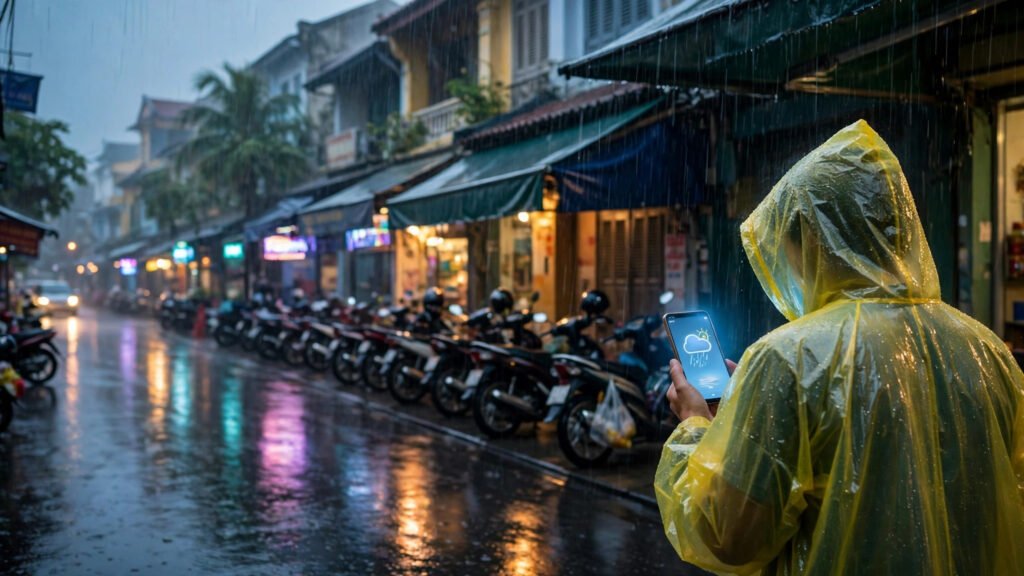
In Vietnam, checking the weather on a phone is rarely a casual habit. For millions of people who travel by motorbike, it is the first step of the journey. Before putting on a helmet and a raincoat, many riders take a quick look at the forecast, the radar and any flood warning for their route. The question is simple: will the road be rideable, or is it better to wait, take another route or leave later?
The answer matters more in Vietnam than in many other countries because the commute itself is exposed to the weather. A car driver can close the windows and keep going through a shower. A motorbike rider cannot. Rain soaks clothes, reduces visibility and makes braking distances longer, while a flooded stretch of road can stall an engine or hide a pothole. A two-minute check on a phone can therefore save a long, wet and risky detour.
Key Takeaways
- Vietnamese riders check rain and flood alerts because motorbike travel leaves them fully exposed to sudden downpours and flooded streets.
- A phone forecast helps riders decide when to leave, which route to take and whether to wait out the worst of a storm.
- The habit is practical rather than technical: it turns a general weather forecast into a personal decision about one journey.
Why Rain Changes a Vietnamese Commute
Vietnam has a tropical and subtropical climate, and heavy rain can arrive quickly, especially during the rainy season. A clear morning can turn into a dark, wet afternoon, and a short shower can leave low-lying streets under water for a while. In large cities such as Hanoi and Ho Chi Minh City, where traffic is dense and many journeys are made on two wheels, even a brief downpour changes how the whole city moves.
For a rider, rain is not just an inconvenience. Wet roads are more slippery, painted markings and manhole covers become harder to grip, and spray from other vehicles cuts visibility. When water gathers on a road, it is not always obvious how deep it is, and riding through deep water can damage a bike. Checking an alert before setting off is therefore a safety habit as much as a comfort habit.
What the Phone Actually Tells a Rider
A modern weather app gives a rider much more than a single symbol for the day. Hourly forecasts show whether rain is expected at the exact time of the commute, while radar maps show where a rain band is moving and whether it is heading towards the rider’s neighbourhood. Flood alerts and local warnings add another layer, pointing to areas where water is already gathering or where conditions are expected to worsen.
That level of detail is what makes the phone check useful. A forecast that simply says rain is possible today does not help someone decide between leaving now or in half an hour. An hourly view, a radar loop and a local alert together give a much clearer picture, and riders use that picture to make small, practical choices about timing and route.
A two-minute check on a phone can therefore save a long, wet and risky detour.
How Riders Use the Forecast in Practice
In practice, the routine is quick and repeated. Many riders check the forecast in the morning before work or school, glance at it again before the journey home, and check once more if the sky darkens during the day. If heavy rain is shown for the usual route, a rider might take a higher road, avoid a known low-lying underpass, or wait under shelter until the heaviest rain passes.
The phone also helps riders prepare. Seeing rain in the forecast is a reminder to pack a raincoat, protect a bag, charge the phone and allow extra time. In a country where a commute can be affected by a single storm cell, that preparation is part of everyday travel, not an exception. Similar everyday phone habits exist elsewhere too: in New Zealand, people rely on earthquake and tsunami alerts on their phones, while in Finland drivers check road weather before winter driving.
- Hourly forecasts help riders choose the best time to leave.
- Radar maps show whether a rain band is moving towards their route.
- Flood alerts warn about low-lying streets and underpasses.
- A quick check also reminds riders to pack a raincoat and allow extra time.
Why This Habit Is So Widespread in Vietnam
Several factors come together in Vietnam. Motorbikes are a central part of daily transport, smartphones are widely used, and sudden tropical rain is a regular feature of life. When those three things meet, checking a phone before riding becomes as natural as checking traffic before driving. It is not a habit that needs to be taught; it grows out of daily experience, because almost every rider has been caught in a downpour at least once.
Local knowledge also plays a role. Riders know which streets flood first, which underpasses to avoid and which alternative routes stay drier. The phone does not replace that knowledge, it sharpens it. A rider who already knows a shortcut can use a live alert to decide whether that shortcut is usable today, and a rider heading somewhere unfamiliar can use a forecast to avoid a route that is likely to be flooded. In Canada, a similar logic applies in winter, where drivers check winter storm and snow alerts before driving.
What to Watch Next
The habit of checking rain and flood alerts before riding is likely to stay part of Vietnamese daily life, because it solves a simple problem: it helps a rider decide when to leave, which route to take and whether to wait out the worst of a storm. As forecasts, radar maps and local alerts become more detailed, riders will have even better information for those small, practical decisions. The core idea, however, will not change. In Vietnam, a quick look at the phone before a motorbike journey is not about the weather in general, it is about one road, one rider and one journey home safely.