China’s exports of clean technology this year will cut carbon emissions outside its borders by an amount equivalent to Brazil’s entire annual emissions from burning fossil fuels, according to a new analysis published on Thursday, October 29, 2026. The finding, from the Finland-based Centre for Research on Energy and Clean Air (CREA), puts a striking scale on how far Chinese-made solar panels, wind turbines, electric vehicles and batteries have spread into energy systems around the world.
According to the analysis, those exports will help the world avoid 450 million metric tons of planet-warming carbon dioxide emissions in 2026. That total is equivalent to 2 percent of the world’s annual emissions outside China, a measure of just how large the country’s clean technology trade has become — and of how much of the world’s energy transition now runs through Chinese factories.
Key Takeaways
- China’s clean technology exports in 2026 will avoid an estimated 450 million metric tons of carbon dioxide emissions outside China, according to an analysis by the Centre for Research on Energy and Clean Air.
- That amount is equivalent to Brazil’s annual emissions from fossil fuel consumption, and to 2 percent of the world’s annual emissions outside China.
- Most of the avoided emissions come from countries in the Global South, where solar power is by far the biggest contributor.
What the analysis found
The headline figure covers four product groups: solar panels, wind turbines, electric vehicles and batteries. Together, the analysis estimates, they will displace enough fossil fuel use abroad in 2026 to avoid 450 million metric tons of carbon dioxide. The comparison with Brazil is deliberate — Brazil ranks among the world’s top ten emitters — and it gives a sense of scale that a raw tonnage figure alone cannot convey.
The impact is also growing fast. Avoided emissions are up from 370 million tons last year, a figure that was already larger than the United Kingdom’s emissions from fossil fuel consumption. In other words, the climate benefit attributed to China’s clean technology exports has grown by roughly a fifth in a single year, even as global emissions remain high.
China dominates clean energy supply chains, from electric vehicles to lithium batteries, and that dominance is central to the story. The same factories that supply China’s own vast domestic market also ship panels, turbines, vehicles and batteries across Asia, Africa, Latin America and beyond, bringing down costs and speeding up adoption in places where clean energy might otherwise have arrived much later.
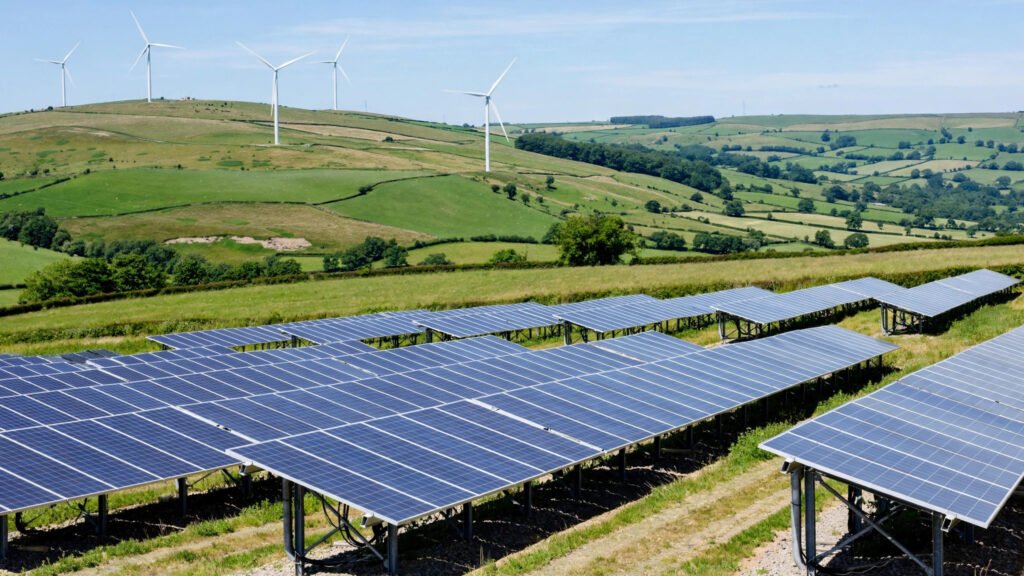
Solar power is by far the biggest source of the avoided emissions.
Where the savings are happening
The bulk of the avoided emissions comes from countries in the Global South, the analysis found. Those countries have increased their imports from China and used them to clean up grids that still rely heavily on fossil fuels. Many are in sunny regions with rich potential for solar power, which helps explain why solar panels account for the largest share of the savings.
That pattern matters because it reverses a familiar assumption about who benefits from the energy transition. Rather than clean technology flowing mainly between wealthy countries, the biggest emission savings are now appearing in developing economies, where new solar and wind capacity often replaces coal or diesel generation outright instead of merely adding to an already clean grid.
Wind power plays a supporting role in the same shift. Turbines shipped abroad add generating capacity that would otherwise have come from fossil fuels, and batteries help store the electricity that solar panels and turbines produce, making variable renewable energy more useful around the clock.
Solar leads the way
Solar power is by far the biggest source of the avoided emissions. Panels are comparatively cheap, quick to install and well suited to sunny climates, so they can be deployed at rooftop scale as well as in large solar farms. In countries with abundant sunshine and fossil-heavy grids, each new panel displaces a relatively large amount of carbon-intensive electricity.
- Solar panels are the single largest source of avoided emissions among China’s clean technology exports.
- Wind turbines, electric vehicles and batteries add further savings on top of the solar total.
- Countries in the Global South account for the bulk of the avoided emissions, as they clean up fossil-heavy grids.
- The climate savings outweigh the emissions from manufacturing the equipment, with a payback time of around six months.
The other side of the ledger
The analysis also carries an important qualification. The climate savings it counts are the emissions avoided outside China, and they are set against the emissions produced in manufacturing the panels, turbines, vehicles and batteries themselves. On that balance, the report estimates it takes around six months for clean technology imports to pay back the carbon dioxide emitted in making them — after which the equipment keeps avoiding emissions for the rest of its working life.
There is also a wider context that the figures do not erase. China is the world’s largest emitter of carbon dioxide overall, even though the United States remains the biggest emitter per person and the biggest historical producer of greenhouse gases. The export figures therefore describe one side of a much larger picture: a country that is simultaneously the world’s biggest polluter and its biggest supplier of the tools for cutting pollution elsewhere.
Why it matters ahead of COP31
The analysis arrives ahead of next month’s COP31 climate summit, where countries will again debate how to cut emissions and who should pay for the transition. Its findings feed directly into that debate, because they suggest that trade in clean technology — not just domestic climate policy — is now one of the main forces reducing emissions worldwide.
For importing countries, the message is practical. Access to affordable panels, turbines, vehicles and batteries can cut emissions quickly, particularly in sunny regions with fossil-heavy grids. For exporting countries, it raises a different question: whether the supply chains behind those products can keep expanding fast enough to meet demand without creating new dependencies.
What to Watch Next
Attention now turns to next month’s COP31 climate summit, where the role of clean technology trade in cutting global emissions is set to feature in the debate. Observers will also be watching whether China’s clean technology exports keep growing, whether the avoided-emissions total rises again from this year’s estimated 450 million metric tons, and whether countries in the Global South continue to account for the bulk of the savings as they clean up fossil-heavy grids. What the analysis already shows is the scale of the shift under way: exports from a single country are now avoiding emissions on the scale of an entire major economy’s fossil fuel use.