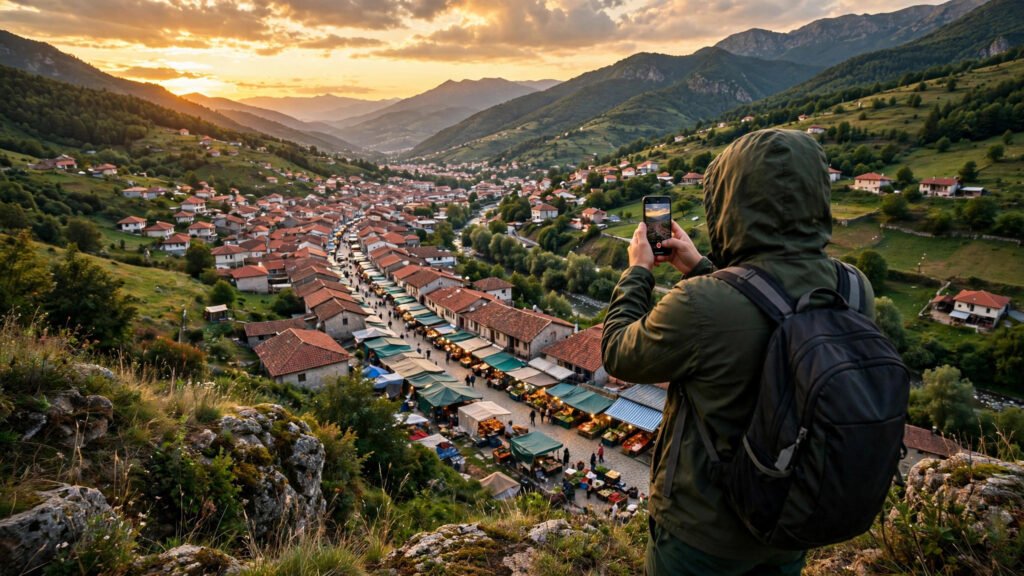
For many families in Kosovo, the most important object in the house is not the television or the car. It is the phone in someone’s pocket. It carries money sent from abroad, news from relatives in another country, school messages, market prices and the daily conversation of an extended family spread across towns, mountain villages and faraway cities.
That is not a story about one clever app. It is a story about distance. Kosovo has a large diaspora, with many Kosovars living and working in countries such as Germany, Switzerland and Austria, while their parents, siblings and children remain at home. When a family lives across borders, the phone becomes the bridge between them — and over time it has become the tool that runs much of daily life as well.
Key Takeaways
- The phone links Kosovo’s diaspora with families at home, carrying money, messages and everyday news across borders.
- For many households, checking a transfer, paying a bill or following a family group chat all happen on the same device.
- In towns and mountain villages alike, the phone has become the practical centre of work, school, shopping and staying in touch.
A Country Shaped by Distance
Kosovo is a small, landlocked country in the Balkans, with Pristina as its capital and a landscape of plains, hills and mountains. Many villages sit far from the nearest town, and winter roads through the mountains can make a short journey feel long. For generations, families here have been used to relatives leaving to work abroad and sending support back home.
That history explains why the phone matters so much. A call home used to mean finding a landline and paying for expensive international minutes. Today a video call costs little more than an internet connection, and a family group chat can include relatives in three countries at once. Birthdays, weddings, exam results and everyday worries are shared in real time, in a way that was simply not possible a generation ago.
Everyday life in Kosovo also runs on the euro, which keeps money sent from eurozone countries simple to understand for the family receiving it. There is no mental conversion to do when a relative abroad sends support — what is sent is what arrives in familiar terms, and that simplicity matters for households planning rent, groceries and school costs.
Money From Abroad Lands on a Phone
For many Kosovar households, money from relatives abroad is a regular part of the family budget, not a rare event. The phone is where that money is watched for, confirmed and put to use. A notification that a transfer has arrived can set off a chain of small decisions: which bill to pay first, what to buy at the market, and what to set aside for the week ahead.
Banking apps and money-transfer services have made that process visible in a way a trip to a bank branch never could. Instead of waiting and wondering, a family member can check a balance, see a transfer, and pass the news to the rest of the household within minutes. In a country where many people work abroad, that visibility turns the phone into a kind of household ledger.
That habit connects Kosovo with its neighbours. In Serbia, for example, instant transfers have changed how people move money between accounts, and Kosovars with relatives across the region recognise the same shift: waiting days for money to clear feels old-fashioned when a phone can confirm it almost at once.
When a family lives across borders, the phone becomes the bridge between them.
Family News Travels in Group Chats
If money is one reason the phone matters, family news is the other. Kosovar families are often large and widely spread, and group chats have become the modern version of the family gathering. One group may hold siblings in Pristina, Prizren and Zurich; another may be for cousins planning a wedding, or for neighbours in a village sharing news about road works, a harvest or a local celebration.
Messaging apps such as WhatsApp and Viber are the everyday meeting places for these conversations. Voice notes suit relatives who prefer speaking to typing, photos carry news faster than words, and a short video from a family dinner can make someone thousands of kilometres away feel present. For older relatives, learning to use these apps has often been a family project in itself, with grandchildren acting as patient teachers.
The result is a kind of closeness that distance used to deny. A grandmother in a mountain village can watch her grandchild’s first steps on a screen the same day they happen. A father working abroad can help with homework over a video call in the evening. The phone does not remove the distance, but it softens it every single day.
Daily Life in Towns and Mountain Villages
Beyond money and family news, the phone organises the practical side of life. Mobile networks such as Vala and IPKO cover the country, and mobile internet reaches far into rural areas, so a phone is useful well beyond the cities. Farmers check weather and market news, shopkeepers stay in touch with suppliers, students follow school groups, and drivers and passengers arrange lifts and deliveries by message.
Shopping still has a strong cash habit, as it does across much of the Balkans. In Albania, for instance, cash still matters for many everyday purchases, and the same is true in Kosovo’s markets, where notes change hands at stalls selling vegetables, cheese and household goods. The phone does not replace that habit — it sits alongside it, used to check prices, confirm an order or tell a seller you are on your way.
The same blend shows up in Bosnia and Herzegovina, where paying cash for everyday purchases remains normal even as phones handle more of life’s organisation. Kosovo fits that regional pattern: the phone is the organiser, the messenger and the money-watcher, while cash keeps its place at the market stall.
For young Kosovars, the phone is also the route into work and learning. Job adverts circulate in chat groups, small businesses promote themselves on social media, and students use their phones to study, apply for opportunities and keep up with friends who have moved abroad to study. Kosovo has a notably young population, and that generation has grown up with the phone as the default way to get things done.
- Money from relatives abroad is tracked, confirmed and planned on the phone.
- Group chats keep large, widely spread families in daily contact.
- Mobile internet reaches towns and mountain villages, not just the cities.
- Cash still matters at markets, while the phone organises the rest of daily life.
- Young Kosovars use phones for study, work and small-business promotion.
What to Watch Next
The phone’s role in Kosovo is likely to keep growing in the same directions this article has described: money from abroad arriving faster and more visibly, family conversations staying daily rather than occasional, and everyday organisation — from school groups to market orders — continuing to move onto the same device. The open question is not whether the phone stays central, but how far it goes: whether more bills, services and small-business trade follow the path that money and messages have already taken. For Kosovar families, the answer will be measured in the small, daily moments — a transfer confirmed, a video call answered, a market order placed — that already make the phone the busiest bridge in the country.