What Batch Cooking Actually Means
Batch cooking for beginners is simpler than it sounds. You cook a larger amount of food once, then divide it into portions you can eat over the next few days. Instead of starting from scratch every evening, you reheat something you already made — and you already know it tastes good.
The idea is not to eat the same meal five days in a row. It is to prepare a few flexible building blocks: a grain, a protein, and a couple of vegetables. Those blocks can be mixed and matched into different meals, so lunch on Tuesday does not have to look like dinner on Monday.
Batch cooking works best when you keep it small. One cooking session of about an hour or two is enough for most beginners. You do not need special equipment, a huge freezer, or a complicated plan.
Why Cooking Once Saves Time All Week
The biggest saving in batch cooking is not the cooking itself — it is everything around it. You wash the cutting board once instead of five times. You wait for the oven to heat up once. You clean the kitchen once. Those repeated steps are what make weeknight cooking feel so long.
Batch cooking also makes weeknights calmer. When dinner is already in the fridge, the question changes from “what should I cook tonight?” to “which container should I reheat?” That smaller decision is much easier after a long day.
For many people, batch cooking also supports eating more protein on a budget, because cooking proteins like lentils, eggs, or chicken in larger amounts usually costs less per portion than buying single ready-made meals.
Start With Three Building Blocks
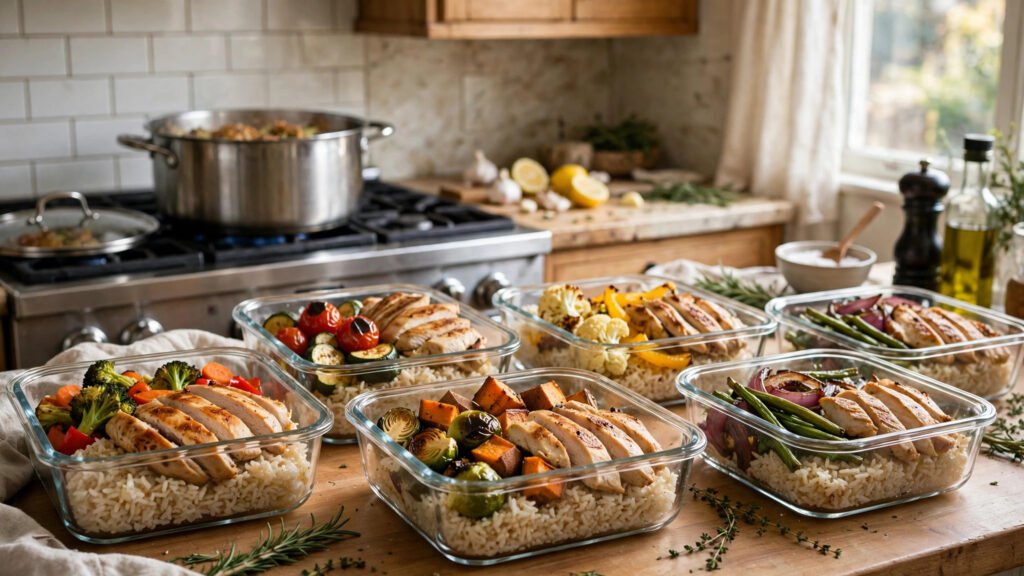
A good beginner batch has three parts. First, pick one grain or base, such as rice, pasta, or potatoes. Second, pick one or two proteins you enjoy, such as chicken, lentils, beans, or eggs. Third, add vegetables — roasted vegetables are a great choice because they keep well and taste good cold or reheated.
Cook each part separately, then let everything cool before packing it. Keeping parts separate matters: rice with roasted vegetables can become a warm bowl one day and a cold salad the next, just by changing the sauce or adding a fresh topping.
If mornings are your weak point, a batch of overnight oats or boiled eggs can sit next to your other containers and make breakfast as easy as dinner. Simple healthy breakfast ideas for busy mornings pair well with this approach.
A Simple First Batch Cooking Session
Here is a gentle first session that takes roughly ninety minutes from start to finish:
- Start the grain first: put rice or potatoes on to cook, since they need the least attention.
- Roast a tray of vegetables: while the grain cooks, chop carrots, zucchini, or broccoli, toss with oil, and roast until tender.
- Cook one protein: grill chicken, simmer lentils, or boil eggs while the vegetables are in the oven.
- Cool, portion, and label: divide everything into containers once it has cooled, and note the day you cooked it.
That is the whole session. You do not need to cook five different recipes — three simple parts are enough for several meals.
How to Store Cooked Food Safely
Storage is where batch cooking succeeds or fails. Let food cool to room temperature before sealing containers, but do not leave it out for hours. As a general rule, cooked food kept in the fridge should be eaten within three to four days. If you want it to last longer, freeze some portions on the same day you cook them.
Use containers with tight lids, and store sauces separately when you can. A dry container of rice and vegetables stays fresh longer than one already mixed with sauce, and it is easier to turn into a different meal later.
Label each container with what is inside and the date you cooked it. This small habit prevents the familiar fridge mystery of an unlabeled box nobody wants to open.
Turn One Batch Into Different Meals
Variety comes from small changes, not new cooking. The same roasted vegetables and rice can become a warm bowl with a fried egg, a wrap with a different sauce, or a cold salad with fresh herbs. Changing the sauce, the topping, or the way you serve it is often enough to make it feel like a new meal.
Keep a few easy extras on hand: a simple dressing, some fresh herbs, a lemon, or a jar of pickles. These take almost no effort and can change the flavour of a reheated portion completely.
Batch cooking also makes it easier to cut back on sugar in drinks at mealtimes, because when food is ready at home, there is less reason to grab a sugary drink and a snack on the go.
Key Takeaways
- Batch cooking means cooking larger amounts once and portioning them for the next few days.
- Three building blocks — a grain, a protein, and vegetables — are enough for a beginner batch.
- Cool, portion, label, and eat fridge portions within three to four days for the best results.
When dinner is already in the fridge, the question changes from “what should I cook tonight?” to “which container should I reheat?”
Common Beginner Mistakes to Avoid
The most common mistake is cooking too much at once. A first batch should cover three or four days, not the whole week. Smaller batches stay fresher, and you learn what you actually enjoy reheating.
Another mistake is cooking only one complete dish. A single stew eaten five times gets boring fast. Separate building blocks give you choices, and choices are what keep the habit going.
Finally, do not aim for perfection. Some weeks the batch will be simple rice and vegetables, and that is fine. A simple batch you actually eat beats an ambitious plan you never start.
What to Watch Next
Batch cooking for beginners starts with one short session, three simple building blocks, and containers that are cooled, portioned, and labelled. Keep the first batch small, store fridge portions for three to four days, and use sauces and toppings to turn the same ingredients into different meals. Once that rhythm feels easy, you can grow the habit — but even a single weekly session already takes the pressure off weeknight cooking.