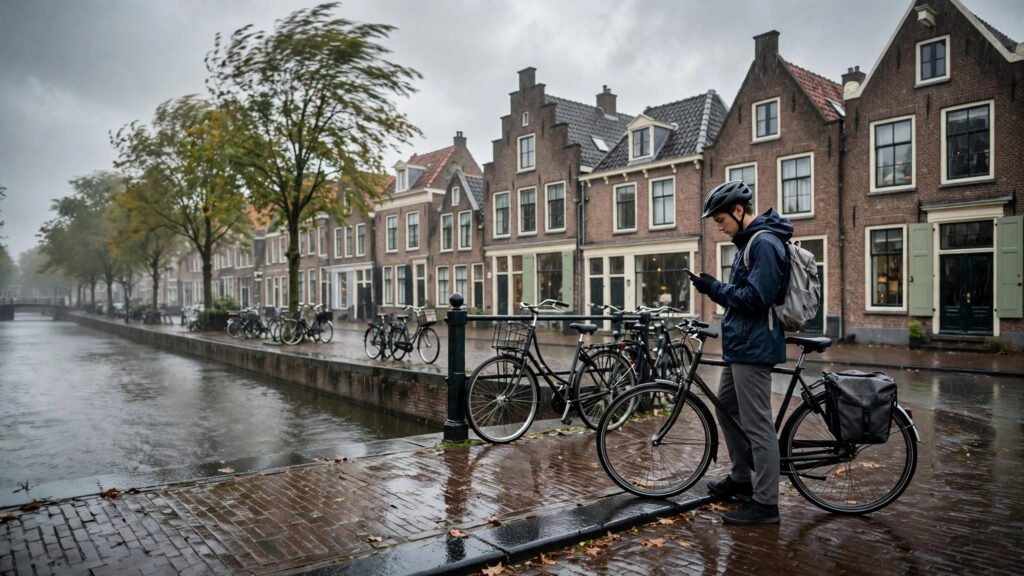
In the Netherlands, the bicycle is not a weekend hobby. It is how millions of people get to work, to school, to the shops and to the train station, in every season. That is why a quick glance at a phone before setting off has become part of the daily routine for Dutch cyclists: before they unlock the bike, they check whether rain is on the way and how hard the wind will push against them.
The habit makes sense in a country that is famously flat, famously wet and famously windy. There are few hills to shelter behind, so a headwind can turn a short ride into a long slog, and a rain shower can arrive with little warning. A phone check takes a few seconds and can change the whole ride: leave ten minutes earlier, take a different route, put on a rain jacket, or wait out a shower with a coffee.
Key Takeaways
- Cycling is everyday transport in the Netherlands, so weather checks are part of the daily routine, not just a leisure habit.
- Rain radar and wind forecasts help riders decide when to leave, what to wear and which route to take.
- Checking the phone before riding, rather than while riding, keeps the habit safe as well as useful.
Cycling Is Daily Transport, Not Just a Hobby
For many Dutch people, the bike is the first choice for short and medium trips. Children cycle to school, commuters cycle to the station, and parents carry groceries and even small children by bike. Because riding happens every day rather than only on fine days, Dutch cyclists cannot simply wait for perfect weather. They learn to ride in rain and wind, and they learn to plan around both.
That everyday reality is what turns a weather app into a commuting tool. A driver might check traffic; a Dutch cyclist checks the sky. The question is rarely whether to cycle at all, but how to cycle comfortably: which jacket, which route, and whether a shower will pass before departure.
Rain Radar Changed the Morning Routine
The biggest change in recent years has been the rain radar. Apps such as Buienradar show where rain is falling and where it is heading, almost street by street, so a rider can see whether a shower will clear in ten minutes or settle in for an hour. That kind of short-term picture matters more to a cyclist than a general daily forecast, because the difference between leaving now and leaving in fifteen minutes can be the difference between arriving dry and arriving soaked.
Before rain radar became common, riders relied on looking out of the window and hoping for the best. Now the morning routine often includes a radar check alongside breakfast: a quick look at the map, a decision about timing, and then the ride. It is a small habit, but it removes a lot of guesswork from a wet climate.
A phone check takes a few seconds and can change the whole ride: leave ten minutes earlier, take a different route, put on a rain jacket, or wait out a shower with a coffee.
Wind Matters as Much as Rain
Rain gets most of the attention, but wind is the other half of the Dutch cycling forecast. On flat, open land there is little to break the wind, and a strong headwind can slow a rider to a crawl, especially on the exposed roads between towns and along canals and dikes. The Dutch even have a word for it: tegenwind, the wind that works against you.
That is why many riders check wind speed and direction as well as rain. A tailwind can make a commute feel effortless, while a headwind calls for extra time, extra effort, or sometimes a sheltered route through town instead of an open path. Wind checks shape outdoor plans in other places too, but in the Netherlands they shape the working day itself, because so many journeys depend on two wheels.
What Riders Actually Look For
A typical pre-ride phone check is short and practical. Riders are usually looking for a handful of answers before they go:
- Is rain coming, and will it pass before I leave or during my ride?
- How strong is the wind, and will it be against me or behind me?
- Should I take the sheltered route through town or the faster open path?
- Do I need a rain jacket, waterproof trousers or just a light layer?
- Is it worth waiting ten minutes, or should I leave right away?
Public transport fits into the same routine. Many Dutch commutes mix cycling and trains, so a rider might check both the weather and the train times in one go. Phone checks before train journeys are a habit elsewhere in Europe too, and in the Netherlands the bike-to-train combination makes them part of a single journey plan.
Checking Before Riding Keeps It Safe
One important part of the habit is when the check happens: before the ride, not during it. Cycling through busy city streets with one hand on the phone is dangerous, and Dutch traffic rules treat phone use on a bike seriously. The sensible routine is to check at home or at the bike rack, make the decisions, put the phone away, and then ride.
Some riders use a handlebar mount for navigation on longer or unfamiliar routes, but the weather decision itself is made before departure. That keeps the phone as a planning tool rather than a distraction, which matters on cycle paths shared with other riders, pedestrians and mopeds.
Why the Habit Sticks
The habit sticks because it pays off every day. A rider who checks the radar arrives drier, plans better and wastes less time sheltering under a bridge. Over time, the check becomes automatic, like locking the bike or grabbing the keys. Phone-based travel habits are spreading across Europe, but the Dutch version is shaped by a specific combination: a flat, windy, rainy country where the bicycle is the default way to get around.
In the end, the phone check is not about technology for its own sake. It is about making an everyday journey a little more comfortable in a country where the weather is always part of the plan.
What to Watch Next
As weather apps get more precise, the pre-ride check is likely to become even more personal, with forecasts tuned to a rider’s exact route and departure time. What will not change is the reason behind it: in the Netherlands, cycling is daily life, and rain and wind are daily facts. A few seconds with a phone before riding will keep helping Dutch cyclists decide when to leave, what to wear and which way to go.