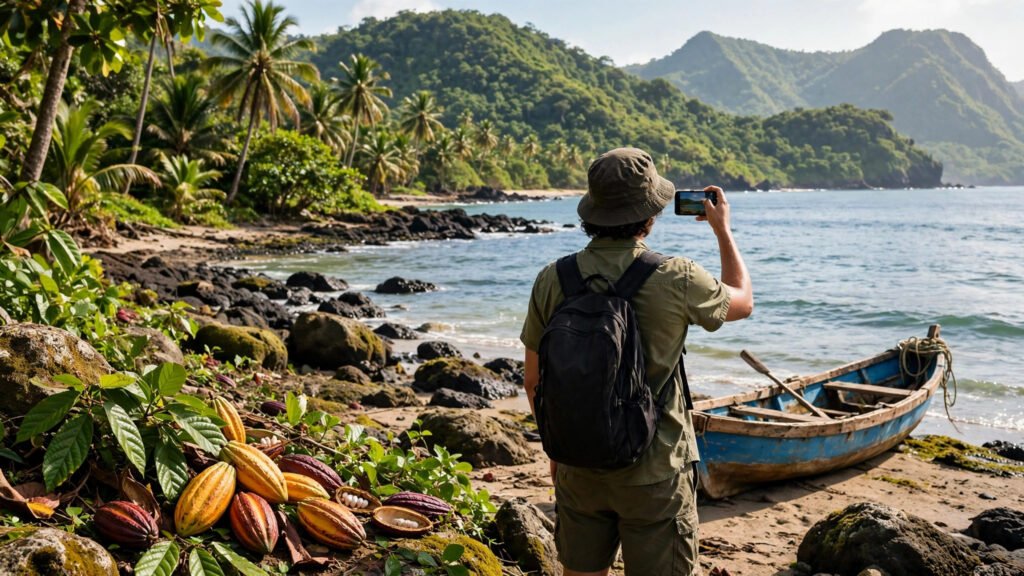
São Tomé and Príncipe is a small island nation off the west coast of Central Africa, made up of two main islands and a handful of smaller islets. Life here moves between cocoa farms in the green interior, fishing villages along the coast, and towns where families keep in close touch. For many Santomeans, the phone is not a luxury — it is the thread that ties the farm, the boat and the family together.
That is why a simple question — why do Santomeans rely on their phones so much — has such a practical answer. The phone helps a farmer check the weather before a day in the fields, helps a fisherman decide when to go out to sea, helps a seller reach a buyer, and helps a family hear from a relative living far away. It does all of this in a place where distances are short on a map but can still feel long when roads are winding, boats are the way across the water, and the next town is on another island.
Key Takeaways
- Phones connect cocoa farmers, fishermen and buyers across São Tomé and Príncipe’s islands.
- Weather, timing and market information shape daily decisions in farming and fishing.
- For families spread across islands and abroad, the phone is the main way to stay in touch.
Life Across Two Islands
São Tomé, the larger island, holds most of the country’s towns, farms and services. Príncipe, smaller and quieter, sits to the north-east, separated by sea. Travelling between them takes planning, and a phone call or message can save a wasted trip. A person can confirm that a boat is running, that a shop has what they need, or that a relative is expecting them before setting out.
Within each island, daily life is also spread out. Farms sit inland among hills and forest, fishing communities line the shore, and markets bring people together in town. The phone bridges those places. It lets a farmer in the interior speak to a buyer in town, and lets a fisherman at the shore tell family at home when the catch is coming in.
This matters even more because island life depends on timing. Rain can change a farming day, wind and sea conditions can change a fishing day, and a market day only works if buyers and sellers arrive at the same time. A phone does not control the weather or the sea, but it helps people plan around them and react quickly when plans change.
Phones in the Cocoa Fields
Cocoa has long been part of life in São Tomé and Príncipe, and the crop still shapes work for many farming families. Growing cocoa takes patience: trees need care through the seasons, pods need to be harvested at the right time, and the beans need to be handled carefully after harvest so they keep their quality.
Phones fit into that rhythm in ordinary, useful ways. A farmer can check a weather forecast before deciding when to work in the fields. A farmer can photograph a crop problem and ask another grower what they see. A farmer can message a buyer or a cooperative contact to arrange a collection, rather than carrying a harvest to town only to find that no one is ready to receive it.
These small steps add up. When information travels faster, less time is wasted and fewer trips are made for nothing. For a smallholder farmer, that saved time and effort can matter as much as the harvest itself, because the working day is long and the margins of island farming are tight.
Phones on the Fishing Boats and at the Shore
Fishing is the other daily rhythm of island life. Fishermen head out in small boats, often early in the morning, and the sea decides much of the day. Conditions can shift, and the difference between a good outing and a wasted one can come down to knowing when to go, where to head, and when to come back.
Phones help fishermen share what they know. A message can warn others about rough water or a change in the wind. A call can tell a family that the boat is returning with a catch, so buyers and neighbours can be ready at the shore. Over time, these everyday exchanges build a picture of the sea that no single fisherman could gather alone.
At the market, the phone keeps working. A seller can let regular customers know that fresh fish is available, and a buyer can ask what has come in before travelling to the shore. In a small island economy, those direct links between the person who catches the fish and the person who buys it are valuable, and the phone keeps them close.
For many Santomeans, the phone is not a luxury — it is the thread that ties the farm, the boat and the family together.
Staying Close to Family, Near and Far
Beyond work, the phone’s most personal job is keeping families together. Many Santomean families have relatives living on the other island, in the capital, or abroad. Calls, voice notes and messages let grandparents hear from grandchildren, let parents check on children studying elsewhere, and let siblings share news across long distances.
Family news travels fast on a phone in a way that letters and occasional visits never could. A birth, a school result, a health worry or a celebration can be shared the same day. That speed matters in a close-knit island society, where family ties run deep and where being far away does not mean being out of touch.
Phones also carry practical family business: arranging a visit, sending a reminder about a shared task, or passing on news from a neighbour. In communities where people know each other well, a single message can reach the right person quickly, and word spreads from there.
- Cocoa farmers use phones for weather, harvest timing and buyer contact.
- Fishermen use phones to share sea conditions and to tell buyers when a catch is coming in.
- Families use phones to stay in touch across the two islands and with relatives abroad.
- Markets work better when buyers and sellers can confirm plans before travelling.
- Small, everyday messages save time in a place where travel takes planning.
Why the Phone Fits Island Life So Well
Island life rewards tools that are portable, personal and always at hand, and the phone is all three. It fits in a pocket on a farm path, it works from a boat or a market stall, and it carries both work and family life in one device. That flexibility is why it has become so central, even for people whose work is deeply physical — growing, harvesting and fishing.
The phone also suits a society built on personal relationships. In São Tomé and Príncipe, people often do business with people they know, and trust is built face to face over time. A phone does not replace those relationships; it extends them. It lets a farmer keep a buyer’s trust by staying in touch, and lets a fisherman keep customers coming back by letting them know when the catch is in.
There are limits, of course. A phone needs charging and signal, and neither can be taken for granted everywhere on every day. But even with those limits, the phone has earned its place because it solves real daily problems: when to work, when to travel, who to call, and how to stay close to the people who matter most.
That is the heart of it. Santomeans do not rely on their phones because of one single app or one single service. They rely on them because the phone connects the three things island life depends on: the cocoa in the interior, the fish from the sea, and the family that holds it all together.
What to Watch Next
What comes next is more of the same steady story: farmers and fishermen finding new everyday uses for their phones, families staying closer across islands and abroad, and markets working a little more smoothly when buyers and sellers can confirm plans before travelling. The phone will keep its place as the thread tying the farm, the boat and the family together, as long as it keeps solving the small daily problems of island life.
For readers in island communities elsewhere, the lesson travels well. In Cape Verde, phones help people stay connected across nine islands, in Samoa, phones run much of daily life, and in Grenada, phones matter most during hurricane season. São Tomé and Príncipe fits that same pattern, in its own cocoa-and-fishing way.