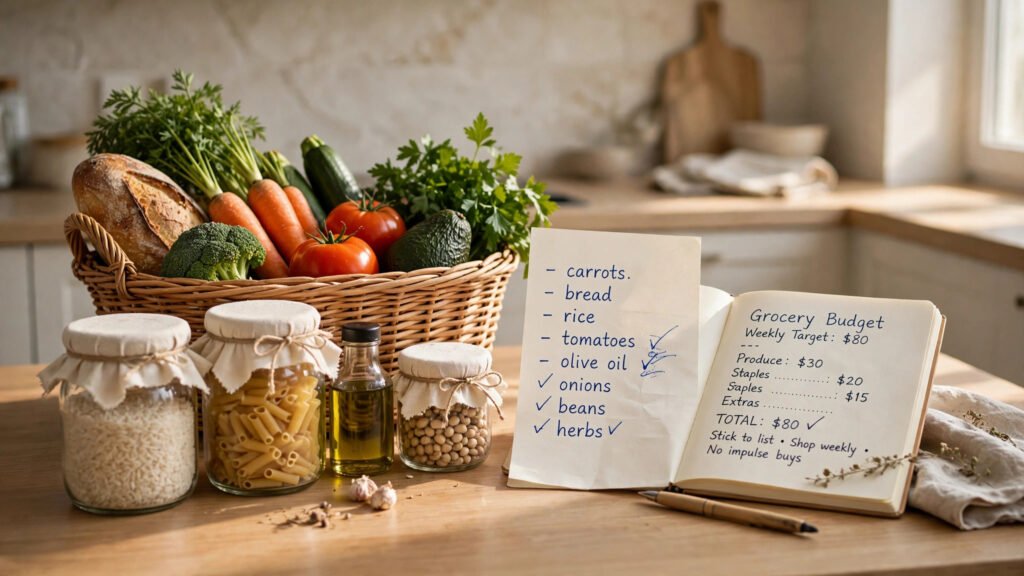
Building a grocery budget sounds simple until the trolley starts filling up. A list helps, but a grocery budget only works when it fits real life: the way you actually shop, cook, and eat during a busy week. The goal is not to spend as little as possible. It is to spend a predictable amount on food you will actually use, without the end-of-month surprise at the checkout.
The trick is to start with your own numbers, not someone else’s rules. Look at what you spent on groceries over the last few weeks, then set a weekly limit you can genuinely keep. A grocery budget that is too tight from day one usually lasts about four days. A realistic one, reviewed once a week, can last all year.
Key Takeaways
- Set your grocery budget from your own recent spending, not from a generic rule.
- Plan meals around what you already have, then shop from a short written list.
- Review the budget once a week and adjust it, instead of abandoning it after one bad shop.
Start With What You Already Spend on Groceries
Before setting any limit, gather a rough picture of your current food spending. Check recent receipts, bank statements, or a shopping app history for the last three or four weeks. Add the totals together and divide by the number of weeks to find your average. That average is your starting point, even if it feels higher than you expected.
From there, choose a weekly figure that is slightly below your average, not dramatically below it. Small, steady reductions are easier to keep than a sudden cut. If your average is high because of takeaways or snacks bought on impulse, separate those from your grocery total so the budget measures the right thing. A grocery budget works best when it covers food shopping only, with eating out counted separately.
Plan Meals Before You Plan the List
Most overspending happens before anyone reaches the shop. Without a plan, every aisle becomes a decision, and decisions made hungry or in a hurry tend to cost more. Picking just three or four main meals for the week is usually enough. The rest can be simple repeats: breakfasts you already like, lunches built from leftovers, and one or two flexible meals for busy days.
Check the cupboards and fridge first. Building meals around rice, pasta, tinned beans, or vegetables you already own means the list gets shorter straight away. When prices are climbing, this habit matters even more, as explained in our guide on how to budget when prices rise. A short list also makes the shop faster, which leaves less time for extras to sneak into the trolley.
A grocery budget only works when it fits real life: the way you actually shop, cook, and eat during a busy week.
Split the Budget Into Simple Groups
One big number can feel hard to control. Splitting it into a few groups makes it easier to see where the money goes. A simple split is fresh food, pantry staples, and household extras. Fresh food covers fruit, vegetables, bread, and dairy. Pantry staples cover rice, pasta, tinned goods, and cooking oil. Household extras cover cleaning products and other non-food items that often hide inside a grocery bill.
You do not need exact percentages for each group. The point is to notice patterns. If fresh food keeps running over, you may be buying more perishable food than the household eats before it goes off. If pantry staples keep running over, you may be restocking items you already have. Either way, the split turns a vague feeling of overspending into a fixable habit.
- Shop from a written list, and keep impulse extras to a small, fixed allowance.
- Buy versatile ingredients that work in more than one meal during the week.
- Use up leftovers and pantry items before buying replacements.
- Track spending weekly, not daily, so one expensive shop does not derail the plan.
Shop in a Way That Protects the Budget
How you shop matters as much as what you buy. Shopping once a week, instead of several small trips, usually reduces impulse buying and makes the total easier to track. If smaller shops fit your routine better, set a smaller limit for each trip and stick to the list for that trip.
Eating before shopping helps, and so does shopping alone when possible, since extra hands often add extra items. At the shelf, compare the price per weight or per unit rather than the headline price, especially for staples. Store brands are worth trying for everyday items, and buying seasonal produce can keep the fresh-food group under control. For ideas on keeping meals affordable without cutting nutrition, see our guide on how to eat more protein on a budget.
Track Spending Weekly and Adjust Without Guilt
A budget is not a test you pass or fail. At the end of each week, compare what you spent with the limit you set. If you went over, ask why before changing anything. A birthday, guests, or a bulk buy that will last for weeks are all reasonable explanations, and they do not mean the budget is broken.
If overspending keeps happening for the same reason, adjust the plan rather than abandoning it. Raise the limit slightly, change the shopping day, or simplify the meal plan. The best time to review the grocery budget is when you review the rest of your money, such as on payday, which is why our guide on how to budget on payday pairs well with this routine. A budget that bends a little is far more useful than a perfect plan that gets dropped after one bad week.
Common Grocery Budget Mistakes to Avoid
The most common mistake is setting a limit based on a number found online instead of your own spending. Households differ in size, diets, and cooking habits, so a figure that works for one family may be unrealistic for another. Another mistake is counting every food-related cost in one pot, which makes the budget look broken when the real issue is takeaway spending.
Buying in bulk only saves money if the food gets used. Large packs of perishable food that go off are wasted money, not savings. The same goes for special offers: a discount is only useful if you would have bought the item anyway. Keeping the list short and the review weekly avoids most of these traps without turning every shop into a chore.
What to Watch Next
A grocery budget sticks when it starts from your own spending, is built around a short meal plan and a written list, and is reviewed once a week without guilt. Split the total into simple groups so patterns are easy to spot, shop in a way that limits impulse buys, and adjust the plan when life changes instead of giving up on it. Over time, the weekly shop becomes calmer, more predictable, and easier to fit into the rest of your money plan.